Trying to find math inside everything else

Archive for the ‘math’ Category

No Right Answer

A bit ago I got yelled at by a commenter on Kate’s blog who claimed that being always right is why we like math. The problem with that point of view is that, while yes, you can always be right while doing computation, math isn’t just computation. So the other day I was talking with a friend of mine, and that prompted me to post the following tweets:

My friend Phil (@albrecht_letao) responded to the question, and he came up with an answer of $20/hr. When I worked it out with my friend, we came up with $14.25. Does that mean one of us is wrong, since we got different numbers?

No, of course not. What happened is we approached the problems in different ways. Phil only calculated the monetary value: with his amount, my friend would earn the same amount of money she does now. He figured this was an important way to look at it, for paying bills and whatnot. Our calculation came from thinking about how her time is being compensated. Since those 16 hours are being wasted (she has to work them for free; actually, she pays to lose that time), we calculated her “real” hourly rate and used that.

There can be more answers than even these two, depending on what you think is important. But it’s a clear example of a problem, solved using math, with no one right answer. That’s what math is about. I tweeted it thinking maybe it could be a problem worth considering in class, to show that essential idea to students.

What do you think?

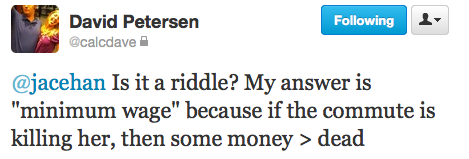
P.S. The right answer, of course, came from @calcdave:
 

Totally Radical

So I’ve been working on creating this board game, Totally Radical. (Tagline: Don’t Be a Square.) After some play-testing and adjustments, and bouncing ideas off of other teachers, I’m ready to post about it.

(But first, thanks to my co-teacher Sarah for helping come up with the game, my coworkers Cindy and Jenn and my Tweeps Max, Jami, and Jamie for playtesting.)


The idea behind the game came before I didn’t really have a good application for simplifying radicals. But I’ve been annoyed at how I see math games designed: do some math action and, if you are correct, you then get to do some game action. While this is certainly how some games work (like Trivial Pursuit), it just separates the math from the game and makes the math seem worthless. So I wanted a game where the math action WAS the game action.

You can read the rules of the game right here: Totally Radical Rules. During the game you have a choice of 5 actions: 3 involve actions we take when simplifying (breaking a number into two factors, taking a root and putting it outside the radical symbol, multiplying two terms together) while two are purely game actions (draw a card, play a special “Action” card).

Other touches of note: the factor cards are exactly half the size of the radicand cards, so that students break up “larger” numbers into “smaller” ones.

You can use factor cards on their own or combined into multi-digit numbers, like so:

(the top would be two factors, 2 and 5, and the bottom would be one factor, 25)
The numbers in the radicand cards are not just simple numbers. There’s prime numbers, composite numbers that can’t be simplified, perfect squares, as well as numbers that can be simplified (going all the way up to 250).

So, how can get this game, you may ask? Two ways!

Make It Yourself

If you want it for free, or are just in that #Made4Math mindset, you can print out the following files on card stock:

Prototype Factor Deck

Prototype Radicand Deck

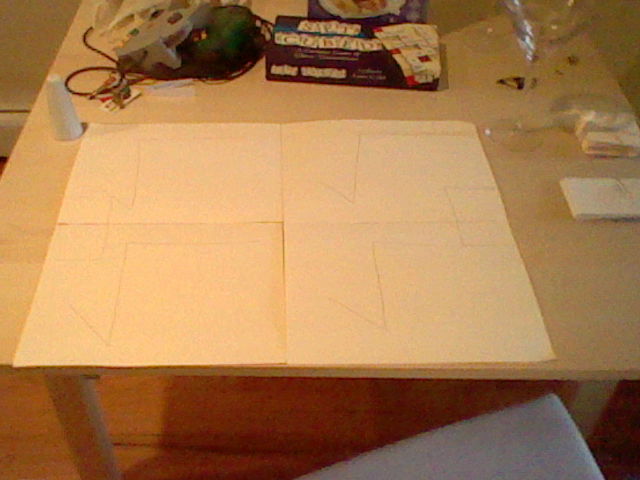
Cut the cards out and label the backs. Print out the instructions (found here). You’ll also need to make a board: 4 big radical signs (I also recommend cardstock.) That might look something like this:

(I also drew in spots to put the card decks in).

Don’t want to make it or want the awesome one pictured above? Then go for option 2:

Buy It

I found this great website called The Game Crafter where you can send in artwork, pick out the pieces, etc, and they will print and construct the game for you. So if you click the button below, it should bring you to the shop to buy it.

TOTALLY RADICAL
DON’T BE A SQUARE

Lab –> Lecture –> Assessment

Next year, the weekly schedule at my school is going to be 2 double periods for a particular class (alternating sections on an A/B day schedule) with a single period for every section on Wednesday. Because of the new schedule, I wanted to make a new structure for my class, which is the title of this post: Lab –> Lecture –> Assessment.

There are roughly 30 proper weeks of learning in the year, so I figured I would have 30 Learning Goals to cover, and do one each week. I would introduce each learning goal with a “math lab,” which may be an actual lab (like the popular M&M Lab for exponential growth/decay) or a 3 Act problem or something else that the students can really engage in before getting down to the nitty-gritty and symbolic way mathematicians deal with the problem.

The next double wouldn’t necessarily just be lecture, but it would be the abstraction of what we did the lesson before, including lecturing on technique and practicing what we’ve learned. Then assessment could be any number of things, but will almost certainly involve a targeted quiz.

Seems like a good structure, right? Problem is, while I have a lot of good labs and problems for most of the topics (and will keep improving), not all of them do. Particularly:

  1. Radicals – Simplifying & Arithmetic
  2. Unit Conversion
  3. Solving in Terms Of
  4. Box-and-Whisker Plots / Percentiles
  5. Scientific Notation
  6. Statistics Vocabulary (univariate/bivariate, etc.)


So my major goal this summer will be to develop something for each of those. The rest I can fall back on what I have, even if I don’t come up with something new/better. But these have nothing. My first task/idea is to develop a board game about radicals. That’s still under development. Any other suggestions would be appreciated.

Math Practical

I was proctoring the Earth Science Regents exam today, and after the students finished I had to direct them to go take the Practical part of the exam in another room. And it got me thinking: why is Earth Science the only exam with a practical? Certainly at least the other sciences should.

Then I thought, well, the foreign language exams do have practicals: they have both a listening section and an oral section, as well as reading and writing. That’s everything. Same for the English exam. And, in a way, the social studies exams do to, in that the DBQs could be considered practicals in that historians work by analyzing various documents. (Though a research aspect would be more pactical.)

So then that got me thinking about having a Math Practical as an exam. It’s totally doable, and I think it would be an interesting idea. How would it work? Here’s an example:

Student goes into a classroom. The proctor hands over supplies: a measuring tape, a clinometer, a Home Depot circular, and a calculator. The exam question is simple: how much would it cost to paint this room? And included must be a margin of error on their calculation. So they need to measure length and width properly, use a clinometer and trigonometry to get the height of the room, calculate surface area, calculate and subtract non-painted areas, turn that surface area into gallons of paint, and then that into a cost. They may even need to calculate exposed surface area of things like cylindrical pipes, too. It’s all math content, but something that is actually done.

Maybe I’ll implement it next year as an exam. If only I didn’t teach trig and surface area right before the Regents….

The Monty Hall Problem

(Step one in going through a bunch of posts I’ve wanted to make.)

After reading this post on the Monty Hall problem last year, I decided to do a lesson on it. And it worked out okay. But, as Riley Lark did in that post, I did it at the end of the probability unit. So this year, I decided to go for it and do it first. And I must say it worked out quite well, because from the get-go it shows them that what they think about probability isn’t quite right.

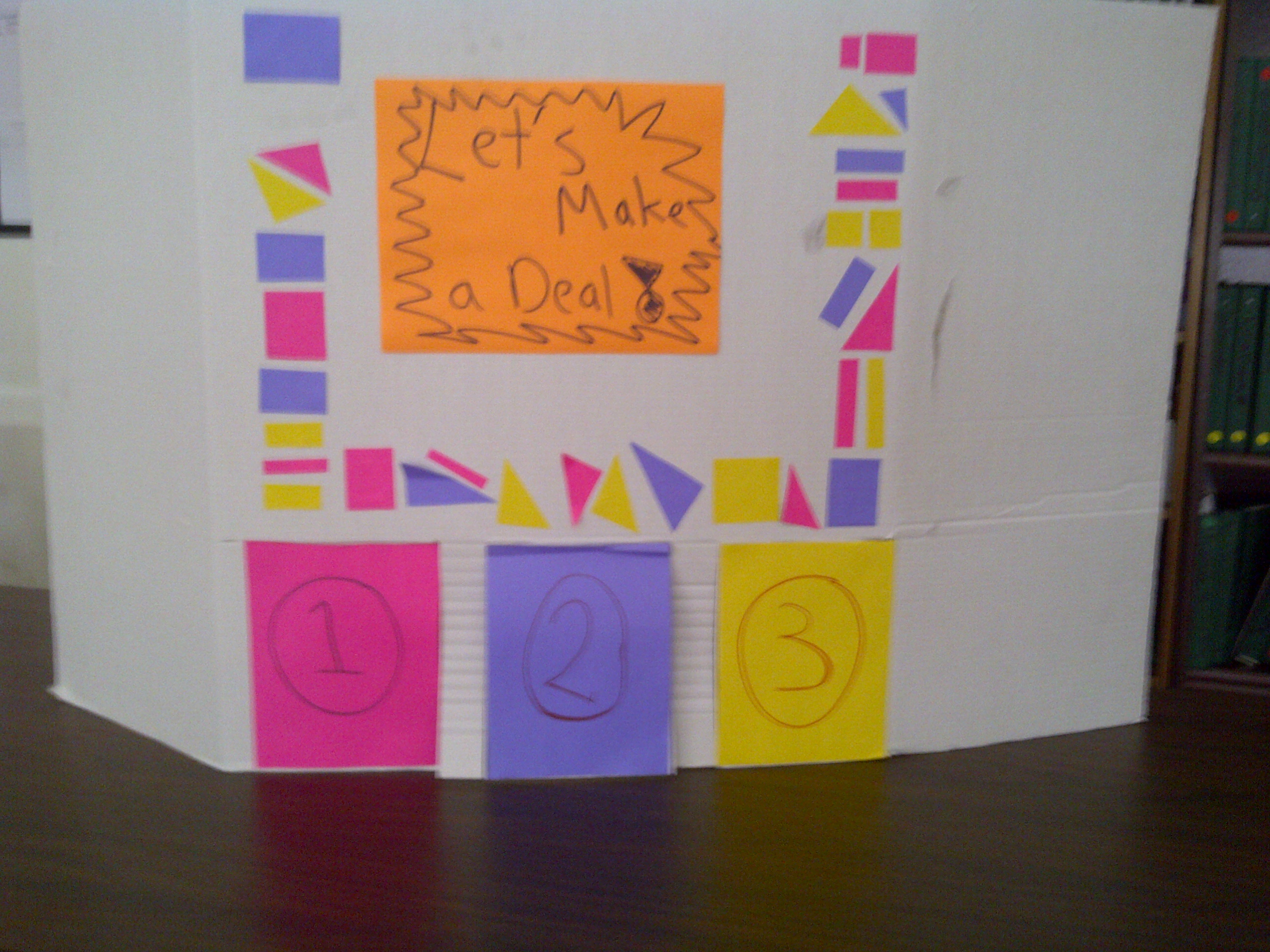
First, to play the game itself, it’s good to have a little showboat, plus something that is easy to reset. So I built this:

Image

(It’s a display board and I cut the doors open.) So it was much easier to play the game from the stay, and to keep my hands hidden as I do things behind the doors.

The other thing I did was, before we discussed the theoretical solution, I had them experiment. I gave each pair of students 3 playing cards, 1 red (for the car) and 2 black (for the goats), so one player played host while the other switched or stayed.

The main thing to learn is you really need to MAKE them switch, because teenagers are stubborn and are sure they were right the first time. But only staying won’t show all the necessary results.

Algebra Taboo

I remember reading about the idea of Math Taboo on Sam Shah’s blog, this post by Bowman Dickson. I feel like I had the idea independently, but it seems like many people have, by doing a cursory Google search of the phrase.

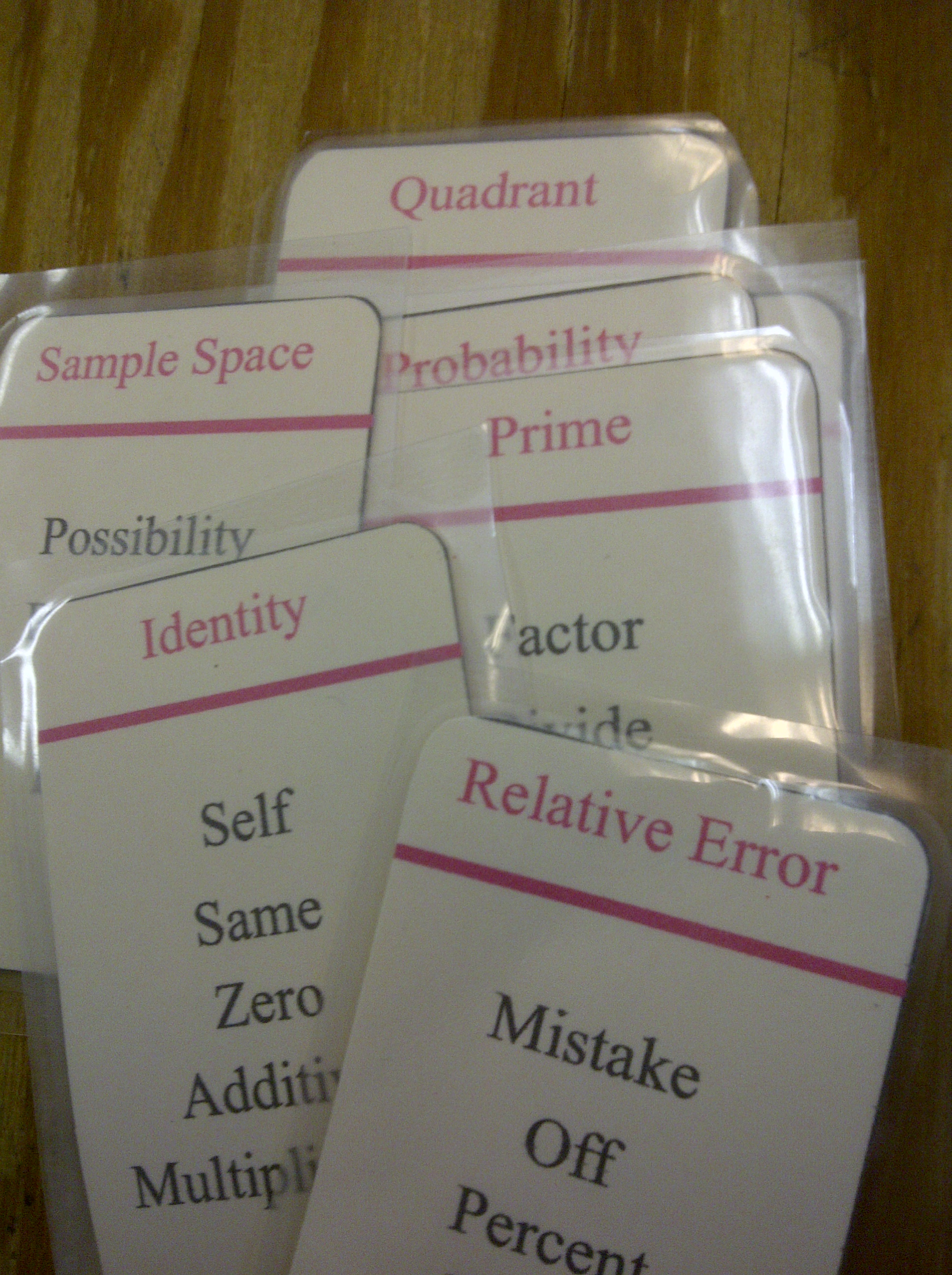
Unfortunately, there are lots of posts ABOUT math taboo, but no real materials provided. If I have seen anything, it’s a lesson plan on having the students make their own. Or I saw one for sale, but it was for the elementary level. So I made one myself.

My co-teacher and I went through all the Integrated Algebra regents given since 2008 and pulled out any words that it’s possible a student might not know. I also went through my own lessons and pulled out any vocabulary I had given them. Below is the .pdf for printing your own (I used card stock and laminated), and two .doc templates if you’d like to make more, or alter the ones I have. I made a total of 126 cards (63 double sides – maybe slightly overboard).

Since I found no others, it makes sense to share.

Downloads

Math Taboo (full pdf)

Math Taboo Pink  Math Taboo Blue (doc template)

Which Is Bigger?

I was going through some old stuff and dug out this gem:

It caused some disagreement when I first posted it, and my students jumped right in, arguing with each other and demanding to know who was right.

It’s a good way to show how mathematical language is precise, and it’s important to choose your words carefully.

3 Acts – Potatoes

I tried this out today in class (and will repeat tomorrow), and it worked out quite well. So now I want to share, my first 3 Acts problem.

Act 1

Potatoes – Act 1 from James Cleveland on Vimeo.

The question I intended to be asked was “How many of each potato do I need for the recipe?” or variants such as “What does he do now that the scale is broken?” or “Did he buy enough potatoes?” Those were all asked, along with some others.

Act 2

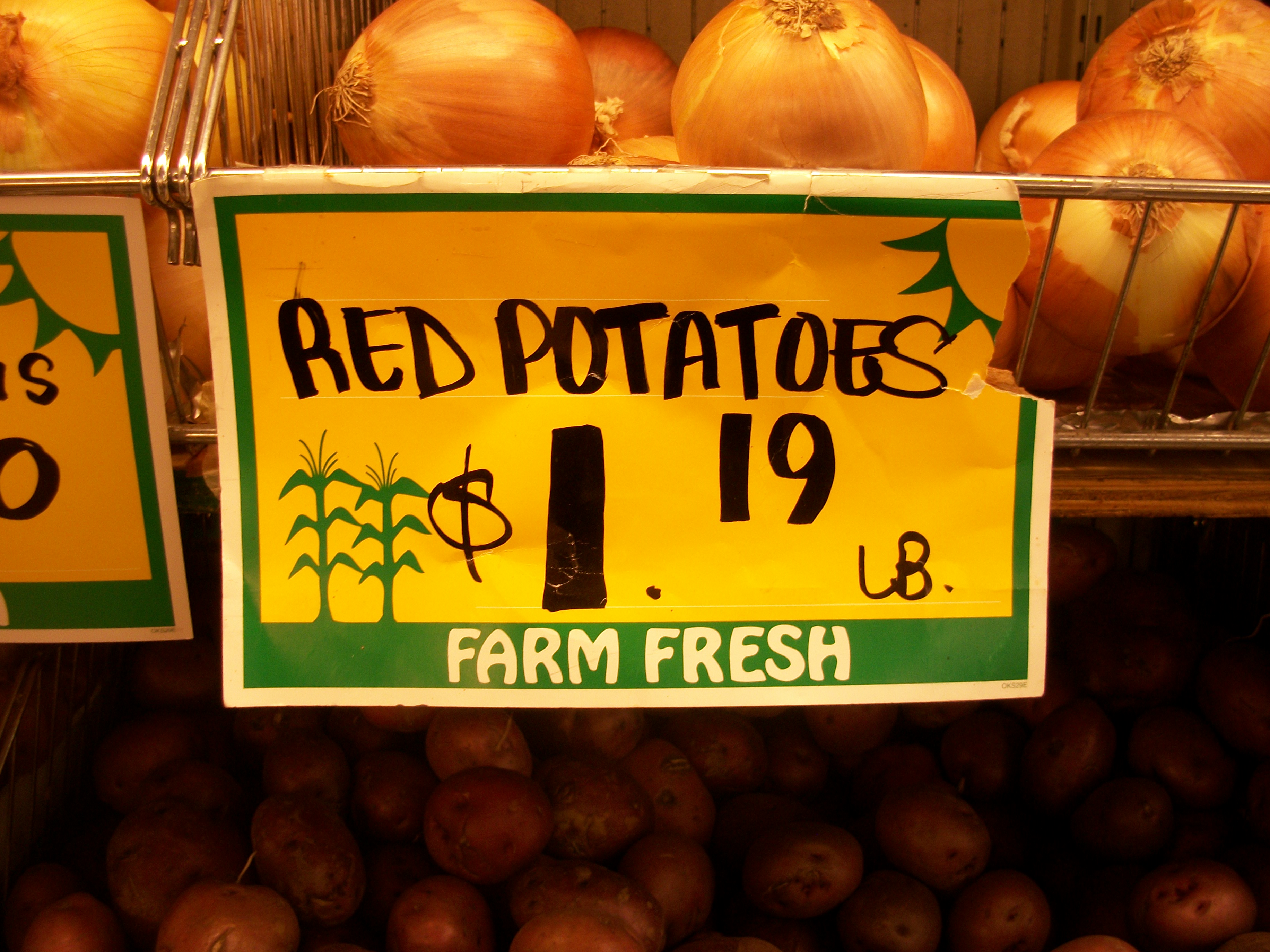
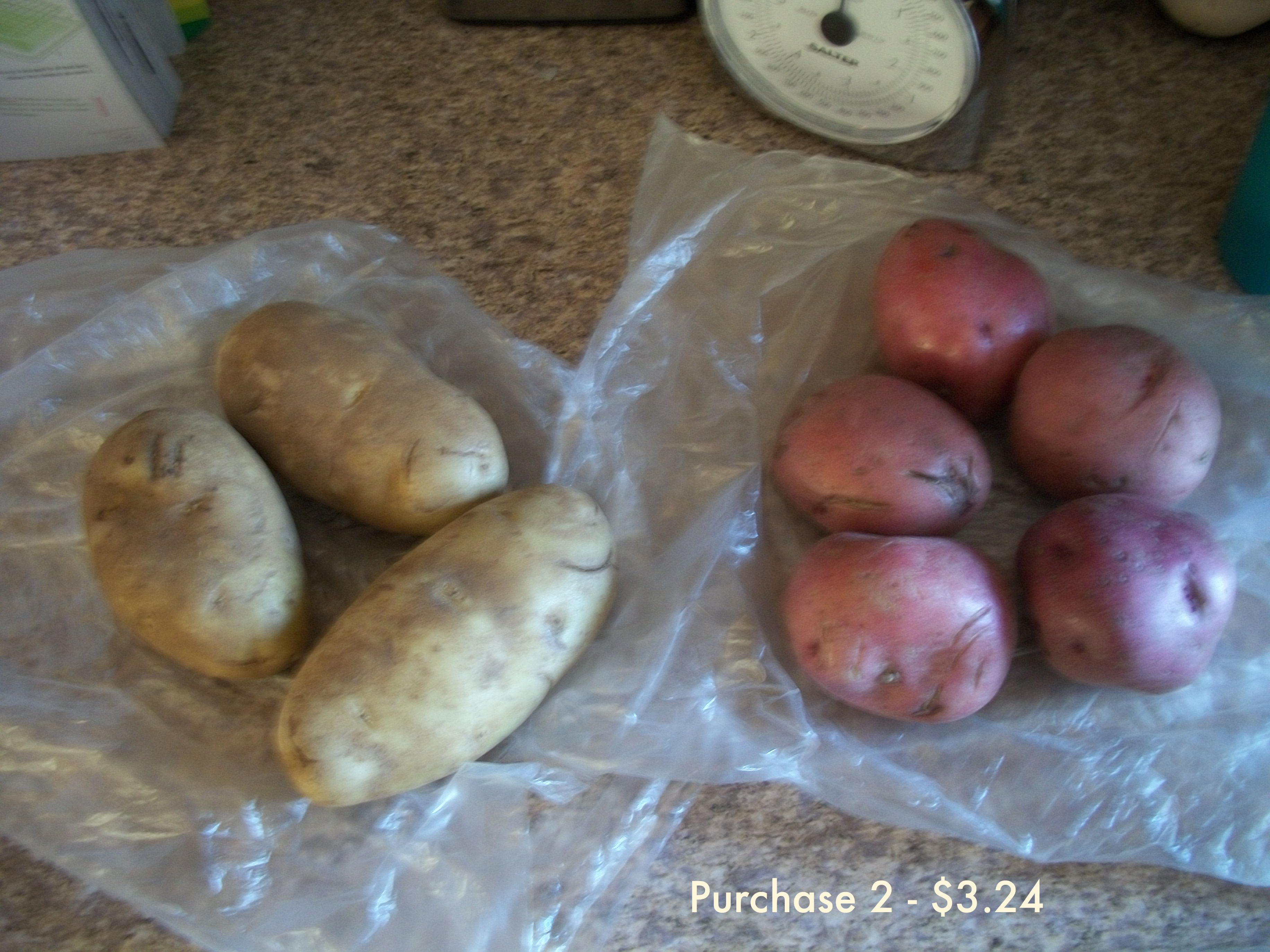
The video shows some things (how many potatoes I bought the first time, and the cashier says the totals), but it’s easier to lay that out when the students ask.

After that, they also wanted to know how much the potatoes cost, so I provided that.

But that’s all the information I can give: my scale is broken and I didn’t take the receipts from the cashier. Luckily, this is enough.

Act 3

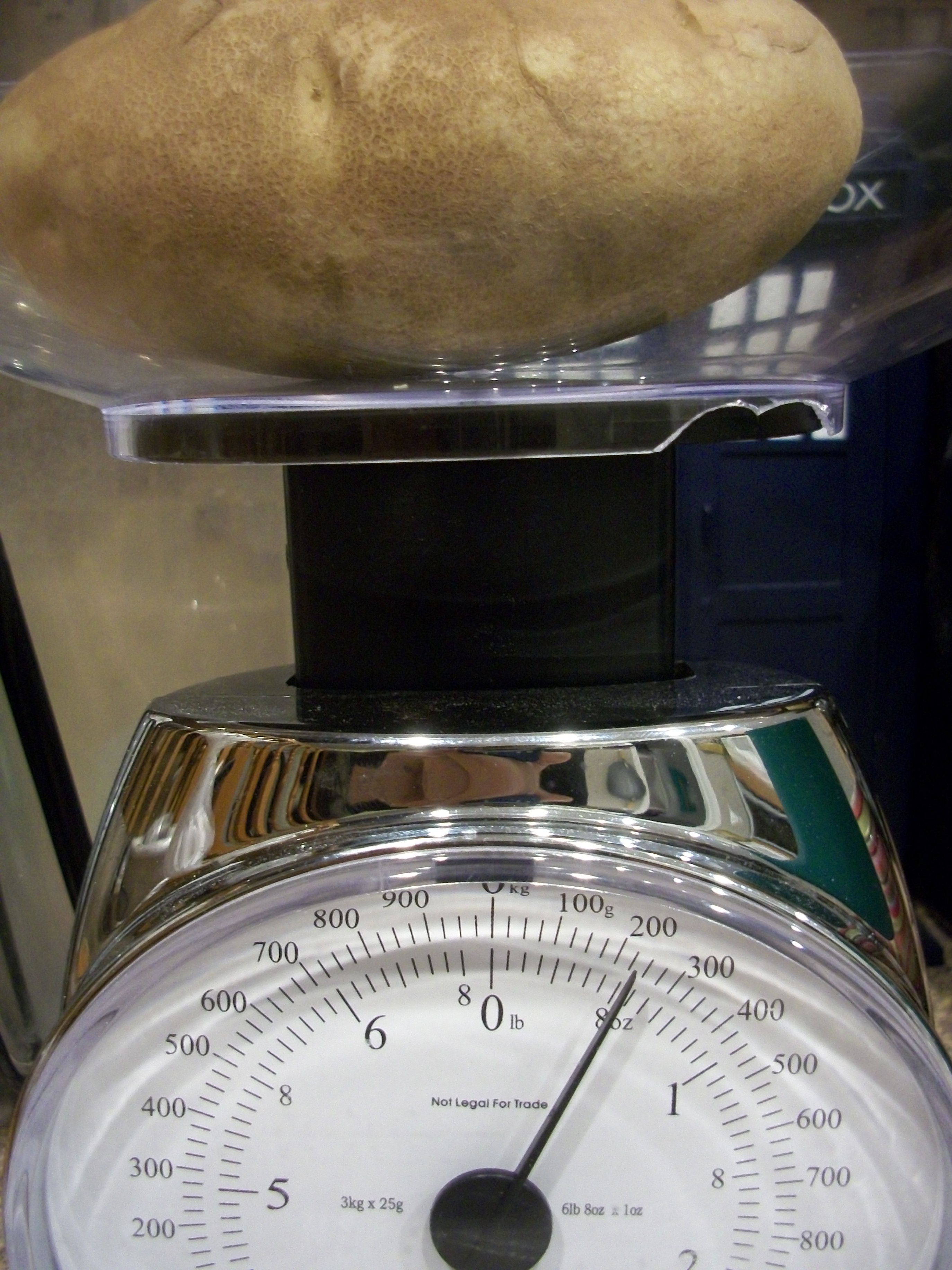
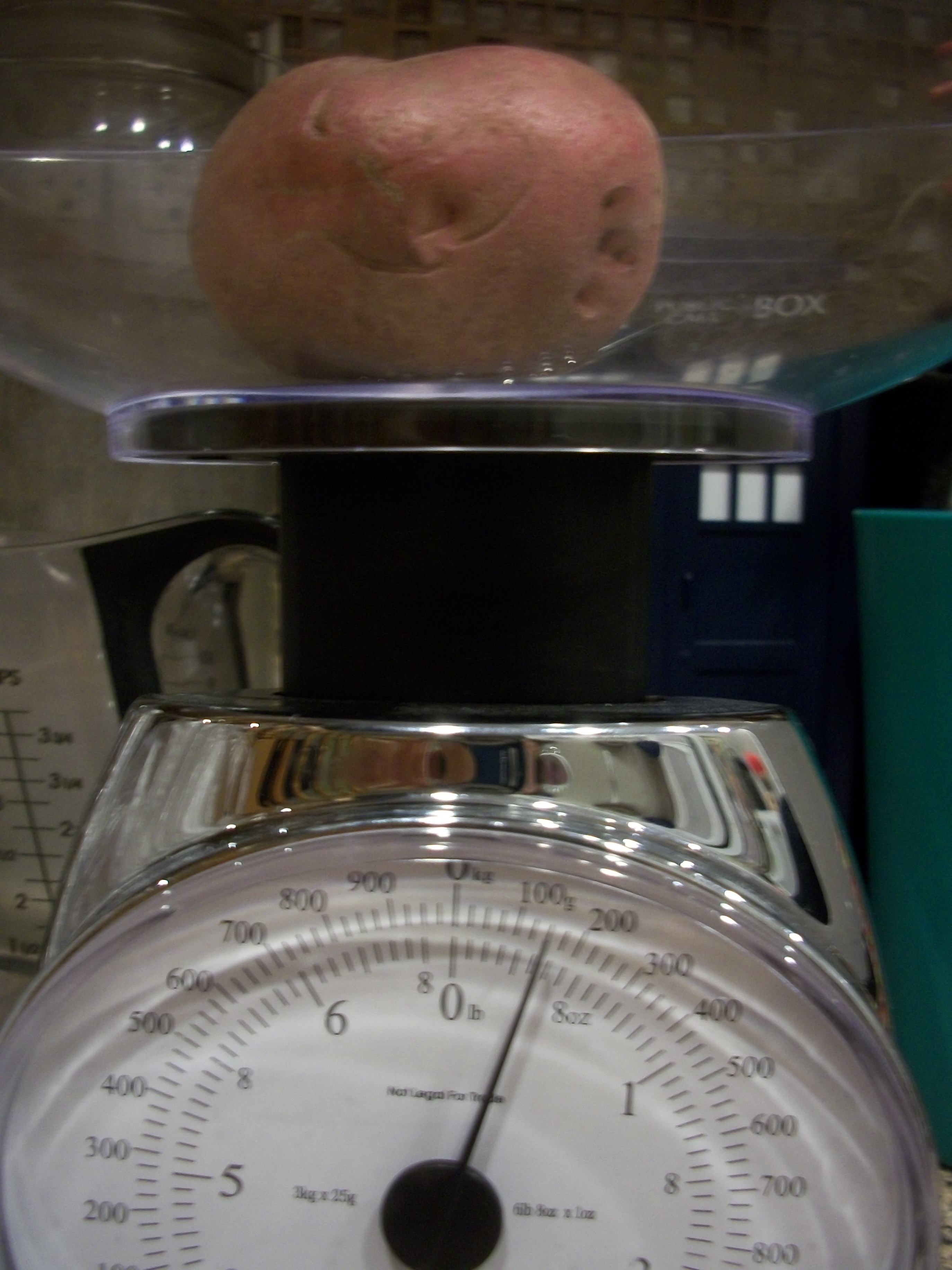
After we calculated the weight, we compared when I weighed them in my “new” scale.

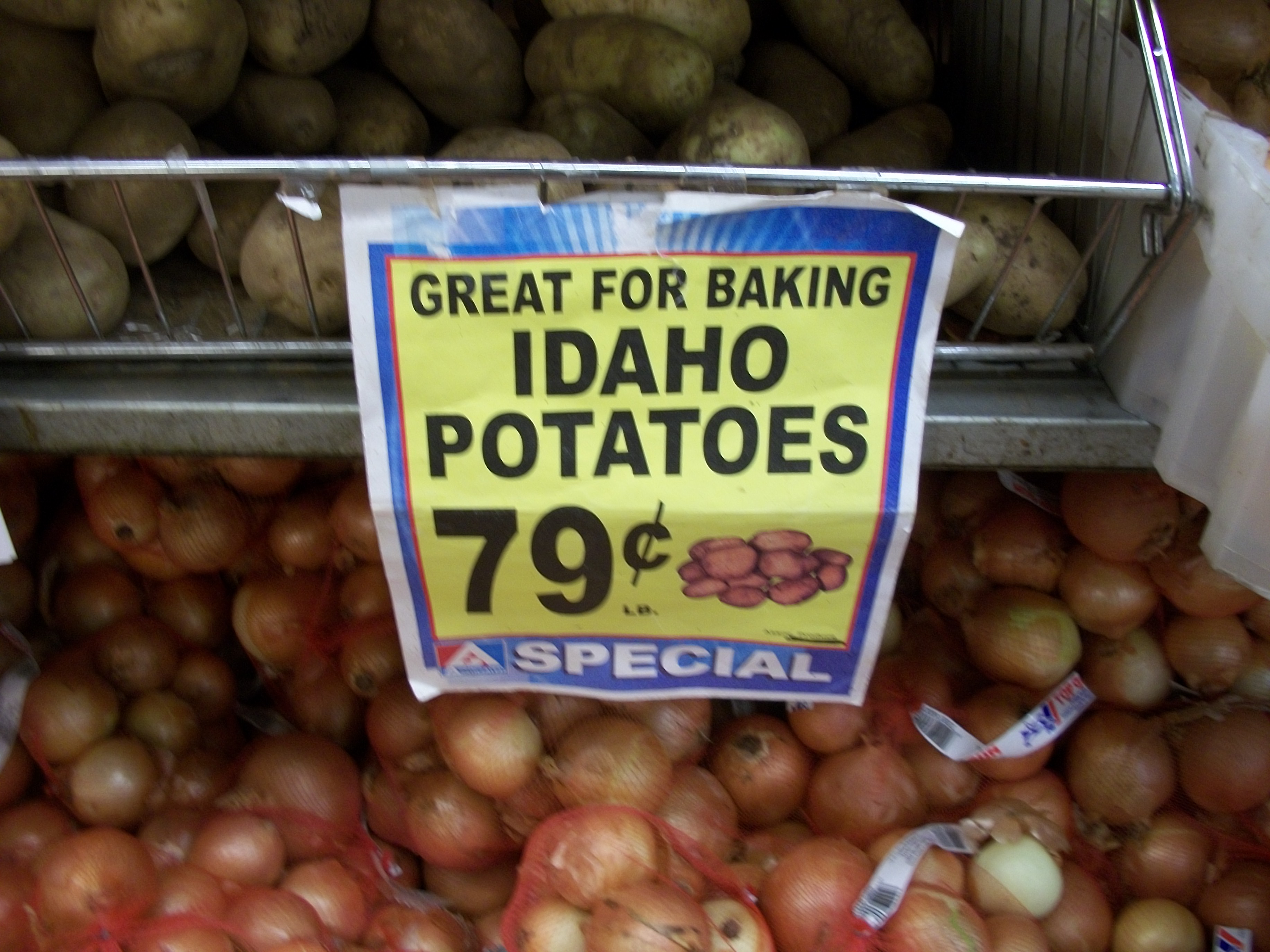
I wish I had my digital scale for a better Act 3, but it’s actually broken (and the calculations I had to do when it was inspired this problem) and the analog was cheaper. The solutions you calculate (.36 lb and .43 lb) are pretty close to the values on the scale (which I peg at .37 lb and .5 lb).

The problem itself, in terms of the system of equations involved, is not that complicated (because I am using it to introduce the concept of elimination), but for the students who solved it quickly, I had a trickier problem up my sleeve:

Extension

What if I had bought 3 Idaho potatoes on the second trip? How can I figure out how much each one weighs now?

The Complete Problem

Potatoes.zip

The Math of Nail Clipping?

To demonstrate how I’m such a nerd (or such a math teacher, or both):

I was just clipping my nails, and started thinking about the math involved. Often when I clip I’ll only do 1 or 2 clips per nail, and they can come out really jagged, pointy, and sharp. But this time I did about five clips, closely following the curve of the nail and it came out much smoother.

Which makes sense, because I’m basically approximating the shape of my nail (a curve) with the nail clipper (a tangent line), and so the more tangent lines I used, the closer the approximation is.

Now the question just is if I can turn that into a WCYDWT, or if it’s too gross for that….

Steepest Stairs and Wacky Measurements

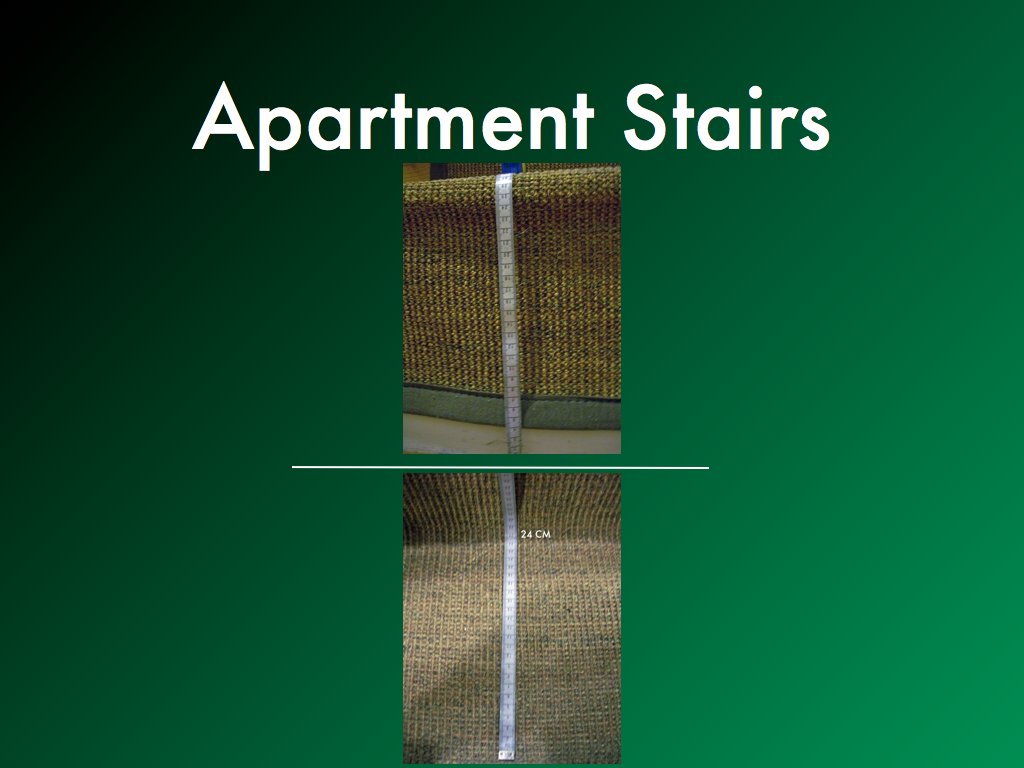
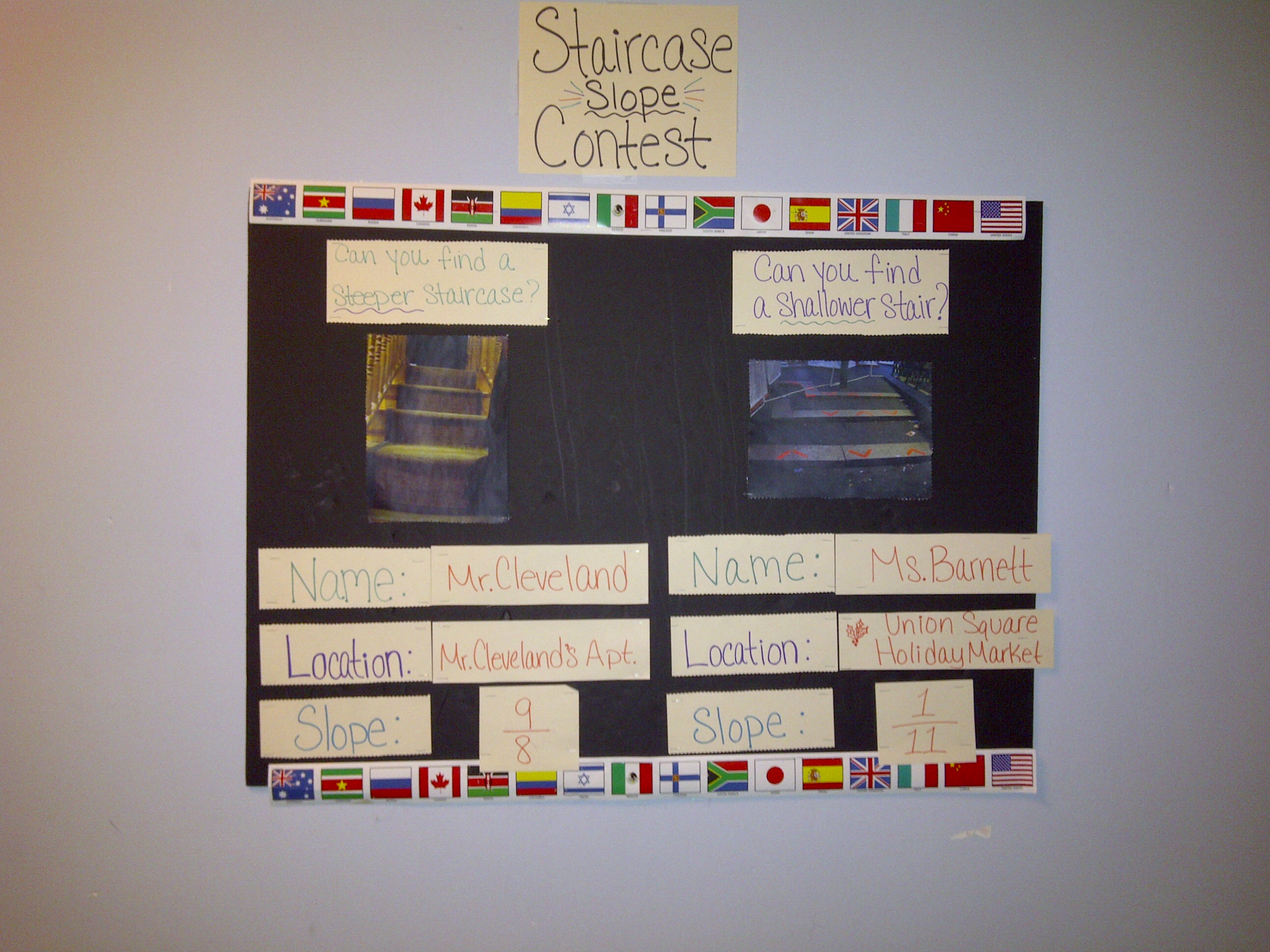
After reading Dan Meyer’s post mentioning a Steepest/Shallowest stairs contest, I decided to go for it. But Dan had them do it for homework after they knew what slope was. I decided that I thought steepness of stairs would be a great way to introduce the concept, and then we can have the contest after. So Ms. Barnett (my co-teacher) and I went around the area and took lots of pictures of stairs we can find. Then I put them up as a warm-up and asked them which were steepest and which were shallowest.

In every class, there was near-universal agreement on which stairs were the shallowest (the top-right), but lots of different votes for the steepest. So then I asked them, “How can you know? What does it mean to be steep?” I got a lot of good, intuitive answers from that (My favorite was that something is steeper when it is closer to being vertical). I asked them what they needed to know to find out which was steeper, and they said we should measure it.

But what exactly should we measure? That took a little cajoling and probing, until we eventually decided on the height of the step and how deep it was. So I gave it to them:

Alright, now we have these measurements, what can we do with them? I lead them on a discussion on how best to use these numbers (a ratio), and we looked at another example. This is a pretty clear example (1/2), but not all of them are. So we used our estimating skills.


And my personal favorite…

(They really asked if I had 11 cell phones. I guess my Photoshop skills are better than I thought.)

The best part of these pictures is that they so naturally prompted them to question the units of measurement. “That one is cell phones, but the other one is hands. How can we compare them?” And so it’s natural to talk about slope as a ratio with no units. I didn’t have to artificially insert it. I even had a picture of a curved slide at the end, so we could theorize about the steepness of that.

Finally at the end I mentioned the contest. Unfortunately, I’m afraid Ms. Barnett and I did too well finding stairs. I’ve had students say they’ve been looking, and some say they found some (but don’t have pictures yet, though they have one more week). I hope someone can knock us off our thrones:

SLIDES:

Steep Stairs (PDF)

Steep Stairs (PPT)