Trying to find math inside everything else

Archive for the ‘lessons’ Category

The Cold War

In my first year teaching I came up with this activity for working with quadratic-linear systems, based in the Cold War and missile defense. It didn’t work as well as I hoped, mostly because it was too complicated, but I like the core of the idea. Maybe now, with more experience and the brainstorming power of the MTBoS, we can think of a way to make it work. But first, I’ll describe what .i actually did.

Students entered the room to find the desks rearranged – four big group tables, and the room split down the middle by a wall of desks, representing the “Iron Curtain.” Each student was then randomly assigned to one of four groups: US Missile Command, US Missile Defense, USSR Missile Command, and USSR Missile Defense. (Only one student, the son of the Georgian consulate, demanded to be switched from the USSR group to the US side.)

Each student then had two roles – one of the roles was their job on the team. Treasurer, secretary, chief engineer, etc. These roles were public. Their other roles were secret – they were things like Double Agent, Handler, FBI Agent, Innocent.

The idea was that each missile team was trying to build a missile that could hit the other country, while bypassing their missile defense. And the missile defense teams were trying to shoot down the missiles. The missiles were represented by quadratic equations and the missile defense by linear functions. But the best way to find out what the other side was planning is through espionage.

Of course, the thing they’ll probably learn is that the missile defense fails and everyone dies – we all lose the cold war.

Below are the files I made way back when. What are your ideas to make this workable?

The Alien Bazaar

Michael blogged and tweeted about exponentiation being numbers instead of operations, which made me think of a lesson I attempted last year. It didn’t go quite as planned, but I liked the idea, so I said I’d write about it.

At a Math for America meeting, we were working on problems with different bases. I was talking with the facilitator about how glad I was that my 4th grade teacher taught us alternate bases, as I’m sure it was pivotal in greatly improving my number sense. Later on in the session, we were talking about “real world math,” and I brought up how it’s not the real world that is important, but that the setting of the problem is authentic and internally consistent. The presenter remembered a lesson she had seen that was totally fictional, but still felt authentic: if aliens with different numbers of fingers (and thus, presumably, differently-based number systems) were at a galactic bazaar, how would they sell things to one another?

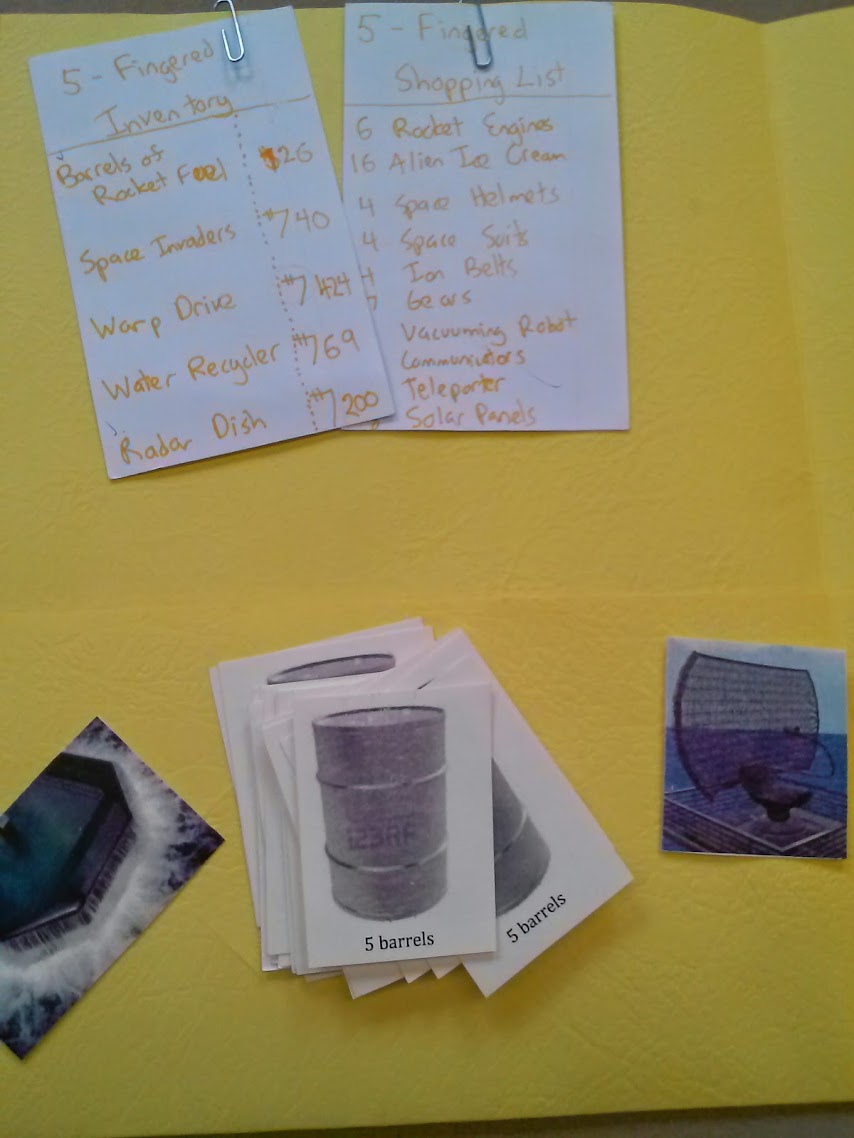
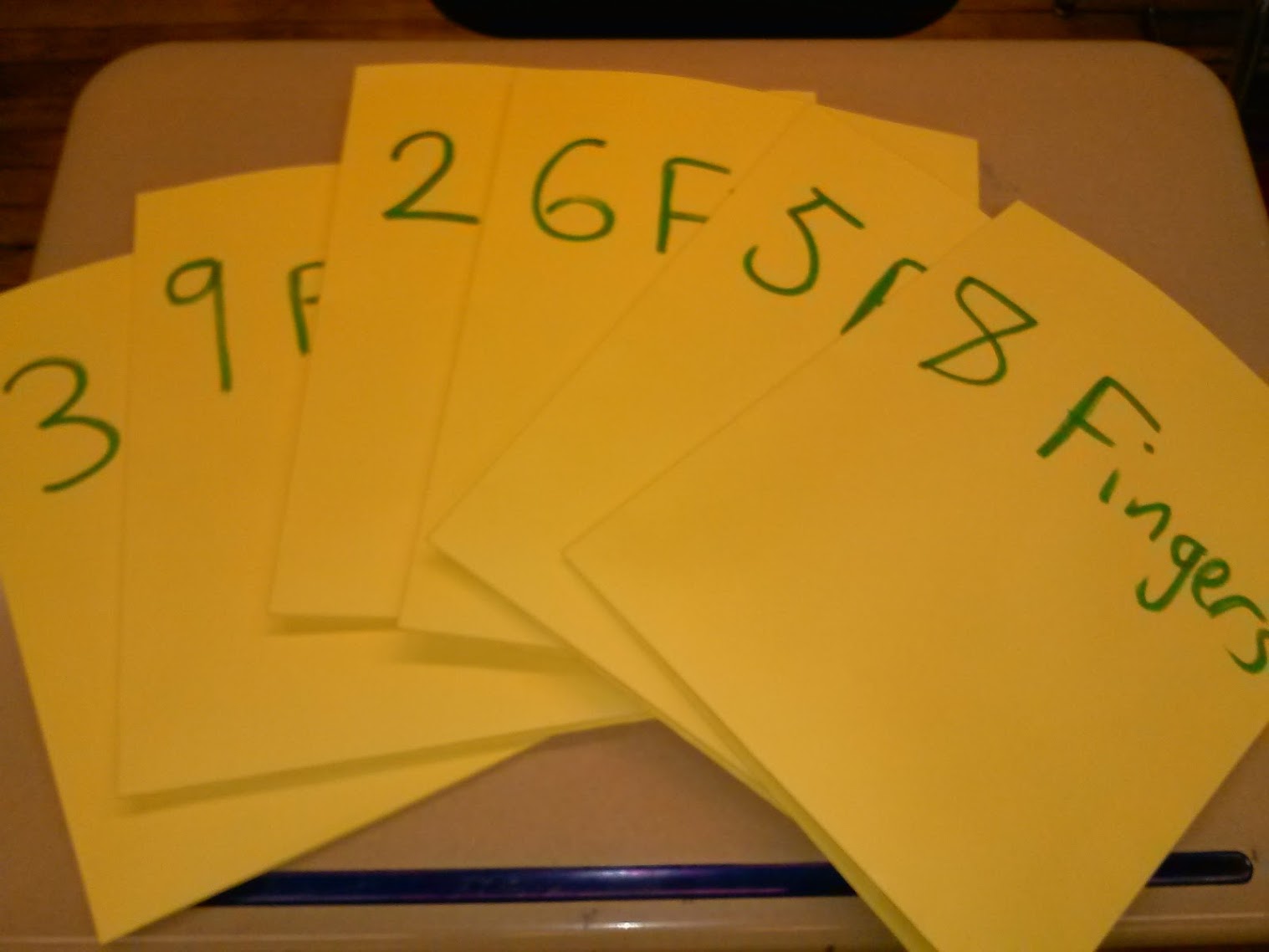
I loved the idea, and so wanted to extended it beyond the simple worksheet-based problems that it was. I wanted to have an alien bazaar right in my classroom. So I developed 6 species of aliens, each with a different number of fingers. Each species of alien brought a different set of items to the bazaar, to sell to the others. Each species also had a shopping list of items it needed to purchase before it could head back home. (I set up groups of four to be all the different races.)

Each species’s inventory was given to them in a folder containing all the items. (Each species had a monopoly on one specific item, but was in competition with the other items, and no one race had enough to satisfy all customers.) The first task was, given the prices of each item in decimal, to convert them to the number system of the group’s race and set up a shop with a display and the items spread out.

After that was complete, each group was given blank-check currency, color-coded by race. Two members of each race were to act as shoppers, going around to the other races and 1) figuring out how much their item cost, 2) figuring how much money that would be in their own number system, and 3) making sure the shopkeeper agreed with their payment.

The other two students stay behind to run the shops, checking the work of each shopper to make sure they were not ripped off. This made is more like a bazaar – both the buyer and the seller had to agree on the price being paid, which can be tough when the buyer and the seller use different number systems!

I was really excited by this idea, but it didn’t pan out quite the way I wanted. I think the main problem was that there wasn’t enough time – these are big, unfamiliar ideas and the whole process needed more time than I was willing to give it. I taught the lesson in the hopes of strengthening their ideas about exponents and scientific notation, but since those are such a small part of the 9th grade Integrated Algebra curriculum, I couldn’t really devote a lot of time to it. I hear they are big parts of the 8th grade common core standards, so this might work well in an 9th grade classroom or even earlier.

What I did do, though, to salvage the situation, is to segue the lesson into an exploration of polynomials, and this is related even more so to what Michael talked about with exponents being numbers.  When we have the number 132, that number is really 1 \cdot 10^2 + 3 \cdot 10^1 + 2 \cdot 10^0. But that’s only for us humans. If that number were written by the 5-fingered aliens, it would be 1 \cdot 5^2 + 3 \cdot 5^1 + 2 \cdot 5^0. And, in general, if we wanted to figure out what that number means for any number-fingered alien, we would use 1 \cdot x^2 + 3 \cdot x^1 + 2 \cdot x^0. So we looked at that in Desmos.

Screen shot 2014-05-10 at 4.17.01 PM

We start with x=4 because 132 doesn’t make sense as a number for a base smaller than 4. And now we can see all the different values of 132 in the different bases. As we go into numbers with more digits, we start to get more interesting polynomials, which was also fun to explore.

I’d love to hear feedback.

Estimation180 and Absolute Value Graphs

So as I was getting ready to teach absolute value graphs a little while ago, I came across this post from Kate Nowak about a lesson she did with it. I liked the idea but…I didn’t like the idea of having to “get my butt into overdrive” to collect data from staff and students about such a thing. I wanted a lesson for the next day, so I didn’t really have time for that.Screen shot 2014-03-26 at 6.52.24 PM

But then I thought, well, my students have been doing Estimation180 all year long. Maybe there’s a way I can use that? I even tweeted Kate about it, but was left to my own devices. (Though I suppose this is finally the write up I promised.)


I thought about what was different between what we’ve done with Estimation180 and Kate’s task, and then it hit me – Kate’s lesson is all about one guessing event, but we have loads of different ones. At that point we have done ~30 estimations. What if we could do some comparisons?


My premise was this – Mr. Stadel, who runs the Estimation180 site, wants to implement a ranking system where all the estimations are listed as “easy” “medium” “hard” etc. But how can he tell when one is hard or not? He knows all the answers, so he can’t used himself to judge. So I told Mr. Stadel that we have lots of data from our class and we could probably use it to come up with a system.

[Aside – this was the 3rd or 4th day of the new semester, and to complete the task I asked students to use the estimation sheets from the previous semester. They revolted, because they claimed I had told them they could throw those out! Which I vowed I didn’t…though, to be honest, it’s possible I did, since I hadn’t thought of this lesson yet. Luckily enough students had not thrown them out so that it could still work.]

So I reviewed what the estimations we did were and I told each group that they have to pick one estimation that they wanted to evaluate. Then they had to collect data from their classmates (and from the binders of other classes, through me) – the estimate each person made and what their error was. Once they have collected enough data, they have to make an Error vs Estimate graph and see what happens. Then I had them make some analysis on whether this counted as a difficult task or not. I didn’t have them compare graphs at the time, but I totally should have.

I think it worked pretty well and many of the students understood why it should be a V-shaped graph. They were at first surprised about where the vertex was, but then it made sense, especially comparing many different error graphs.

Estimation Difficulty Rating (Word format)


Trig without Trig

Over the summer I made a Donors Choose page in the hope of getting some clinometers, so that we can go out into the world and use them to calculate the heights of objects like trees and buildings. And we did!
I created the Clinometer Lab as an introduction to Trigonometry. As such, prior to the lab, they had not seen any trig at all. So I started off with this video as the homework from the night before.

In class, we talked about how, when the angle is the same, the ratio of the height and shadow is the same. And how, long ago, mathematicians made huge lists of all of these ratios.
So if they told me any angle, I could tell them the ratio, and then they could just set up the proportion and solve.

So we left the building and went to the park, armed with clinometers, measuring tape, calculators, and INBs, so do some calculations. I had the students get the angles from their eyes to the height of a tree, from two different spots, and the distances, so they could set up a proportion and discover the height of the tree. (When they finished, they did a nearby building. If they finished that too, the extension problem was to switch it up: given the height of a famous building, the Metlife Tower, that they could see from the park, and determine how far away they were.)

Clinometer Park Pic

It went really well, and I think they got the idea. The fact that they could choose which tree to measure and were given free range of the park, and could choose where to stand to look at the top, but always had to come back to me to get their ratio, worked seamlessly. I could check in on them easily and keep them on the right path. (Especially with my co-teacher there to keep them all wrangled, or the AP who observed/helped chaperone the classes without my co-teacher.)

The next class, I revealed to them that I was not using that crazy chart to give them their ratio, but rather they can just get it themselves from the calculator, which basically internalized the list. Then they got it, that is was just ratios and proportions, not some crazy function thing.

Trig as a topic did not go great in my class, but that is the fault of my follow-up lesson, where I tried to squeeze in too much and didn’t do any practice, not that fault of this lesson, which still sticks in their minds. Later in the year we were doing a project about utilizing unused space, so we picked empty lots but couldn’t get in. So in order to figure out how big they were, we used clinometers, and trig. Now that’s a real world application.

The Lab

Clinometer Lab Instructions

Clinometer Lab Sheet

The Archimedes Lab

I love this lab, but I’m sure it can be improved, so I’d love to hear feedback in the comments.

When I was student teaching at Banana Kelly, they had a combined math/science program that often had many lab activities, both math labs and science labs. But I noticed the Systems of Equations unit didn’t really have a lab, so I set out to make one. I created the Archimedes lab because of that.

The story of Archimedes and the Crown of Syracuse says that he was able to determine that the crown was not pure gold by using mass and volume. We start by watching a short video about the story. (I had assigned the video as homework, but no one watched it. While my video homework watching rates aren’t stellar, they’ve never been this bad. I blame the fact that it’s been a while: the last video was in December.)

Then I tell them that we can do Archimedes one better. It’s been over 2000 years since he lived and we have algebra and precise tools on our side: we can figure out exactly how much gold was stolen, not just if some was.
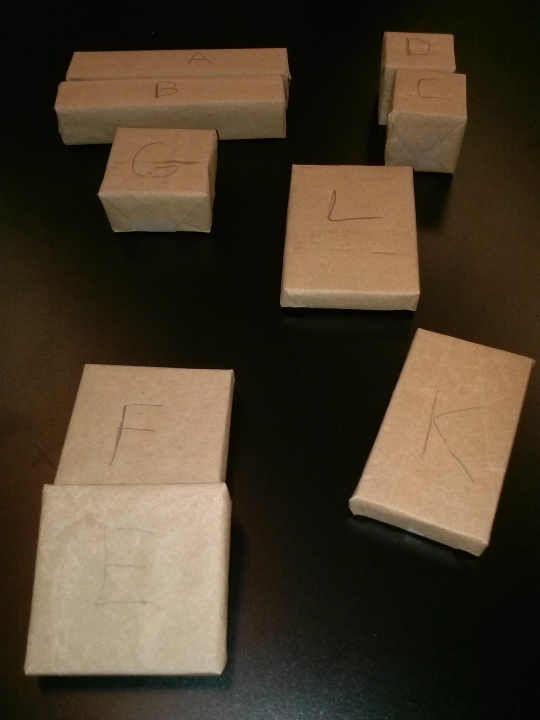
CAM00027

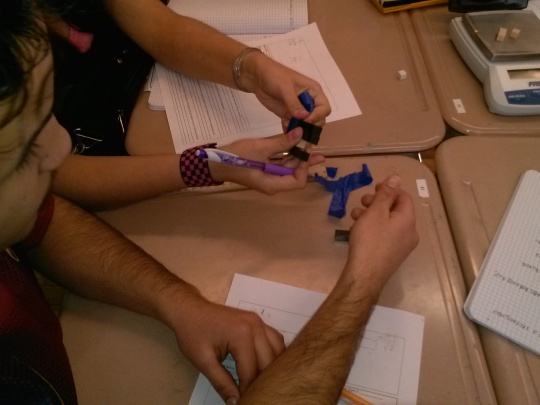
To demonstrate this, we built several Mystery Blocks out of two different materials. Back at BK, we had lots of different materials in the science closet to use. Because the students would know the type of material (brass, aluminum, wood, etc) but not the size and shape, they would have to use density to solve the problem. (But I had seeded the story throughout the whole unit.) The density kit I requested last year never arrived, though, so I had to scrounge around for something, and I found the perfect thing: Cuisinaire Rods.

I noticed that, despite what I expected, the longer Cuisinaire rods are much less dense that the small single cubes. So I used some amount of cubes and some amount of rods to make the mystery blocks. Then I simply give the kids one cube, one rod, the block, a scale, and a ruler, and ask them to figure out how many if each kind are in the block.
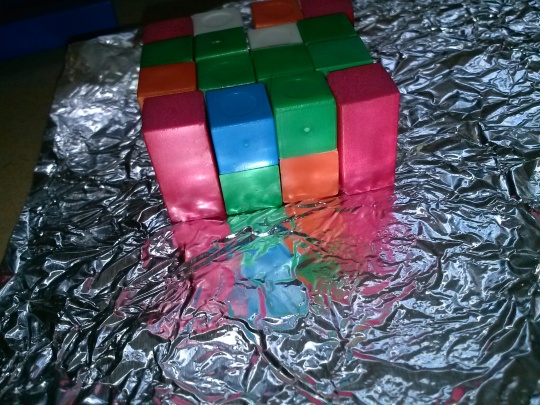
CAM00024

This lab was much more procedural when I first made it, but I’ve embraced the problem-solving classroom since then. And while my students were unsure of what to do, I feel like we’ve built up to this kind of unstructured problem, and most of them took to it well.

When they thought they had a solution, I would press them on it. “Why do you think it’s 5 yellow blocks and 5 cubes?” If they responded that that matches up in size to the block, I would point out any others do also, like 4 yellow and 10 cubes. I would implore them to use the tools available to them. (We also talked about mass, volume, and density in the warm-up.) If they told me some combination gave them the right mass, I would point out that their volume would be off. If they told me no combination gave them the right volume AND right mass, I would ask why. Most would identify the tape/foil/wrapping paper as the culprit.

Most importantly, if they gave me a solution that was well supported, even if incorrect, I told them there was only one way to find out if they were right: unwrap the mystery block and see. The excitement at each table when they got to that point was palpable. One student said it felt like Christmas. If they were right, they were ecstatic. If they were not, they tried to figure out where they went wrong.
CAM00025

When I first made this lab, I put it at the end of the Systems unit, thinking they would need those tools. Now I have the confidence to put it at the beginning, and let them figure it out. No one used equations explicitly to solve the problem, but they definitely grappled with the idea that two separate constraints need to both be satisfied in order to solve a problem, which is an important understanding for systems.

This post is getting a little long, so I’ll probably split off into another posts with problems I had with the lesson, things that went well, and a call for suggestions. I just wanted to get this out there. It’s been a long time since I’ve blogged, because I’ve had a lot going on in my life. So I want to get back to it.

The Lab Sheet

The Archimedes Lab

Accompanying Graph
Dragonbox in the Classroom

Last week, my students spent 2 double periods playing Dragonbox, the iPad (and computer) game designed to teach solving linear equations, which I think it does quite well. (I agree with many of Max Ray’s opinions when he writes about it here. Which makes sense, as Max first showed me the game this past summer.)

While one of my goals was teaching solving equations, it was not my only one, which is what I wanted to talk about here. (I’ll probably review the game itself later.) I told the students that I had forgotten to make a lesson, so we were just going to play a game on the iPad today. What I did want, though, was for them to home their ability to figure out how something works. To me, this is an even more important lesson to get than just solving equations.

To this end, I talked about how websites like GameFAQs has walkthroughs for all sorts of games, but one walkthroughs were all written by regular players, who sat down with a game right when they bought it, took notes on what they did, figured things out, and shared with others. So we were going to take that role. In their Interactive Notebooks, I told them to write down every thing they could do in the game. Whenever they came across a new rule, some new ability, or a new solution to a tough puzzle, write it down. Example: “Tap the green swirl to make it disappear.”

The surprising part was, they really did it, and quite well. Hey even discovered a lot of things about the game that I didn’t know, because I always played it “perfectly,” since I knew the rules of algebra. (Example: if you have a denominator under a green swirl (aka 0) and tap it, the while thing disappears. Or a green swirl won’t disappear if it is the only thing left on its side, which was fun to talk about later.)

At the end of my first double, with about 20 minutes left, I compiled all the notes they took using Novel Ideas Only (where all students stand and share things they have written, only sitting once everything they have written down is said, either by themselves or someone else), creating a master list of actions they could refer to next time.

The next class, they came in and immediately started playing. I must say, the entire time I used it, the kids were really into it, and most of them were really persistent. Some occasionally requested help, but my intervention was minimal. This time, I had this answer several questions after they had played some more, which really dove into the meat of the game. What does this card or action in the game represent in math? Why does a certain rule in the game happen that way?

One thing I really loved is how solid the game got them on how dividing something by itself won’t make it go away. It was a tactic many of them tried in several levels and it always got them stuck. I focused on the difference between “zeroing out” and “oneing out.”

We had one major downside, technology-wise, though. Each game had four save files, which worked out, because I had four sections. So one file per student. But there is nothing to stop a student in one class from playing on, or, even worse, DELETING, another student’s file. I e-mailed the company, and they said a solution would happen in a future update.

Today was the follow-up quiz, and they mostly did well. The things they stuck on was something that wasn’t well covered in the game: the distributive property. But we’ll work on that.

Steepest Stairs Redux

Last year I made a lesson about determining the steepest stairs, using pictures my co-teacher and I took and based on an idea from Dan Meyer. It took about a period, and was mostly teacher-led. But after arguments and deep thinking about slope, I wanted to go into the lesson deeper, so I turned it into a lab.

I started the same way, throwing up the (new and improved) opening slide and asking which they thought was the steepest and which was the shallowest.

Screen shot 2012-11-26 at 1.55.16 PM

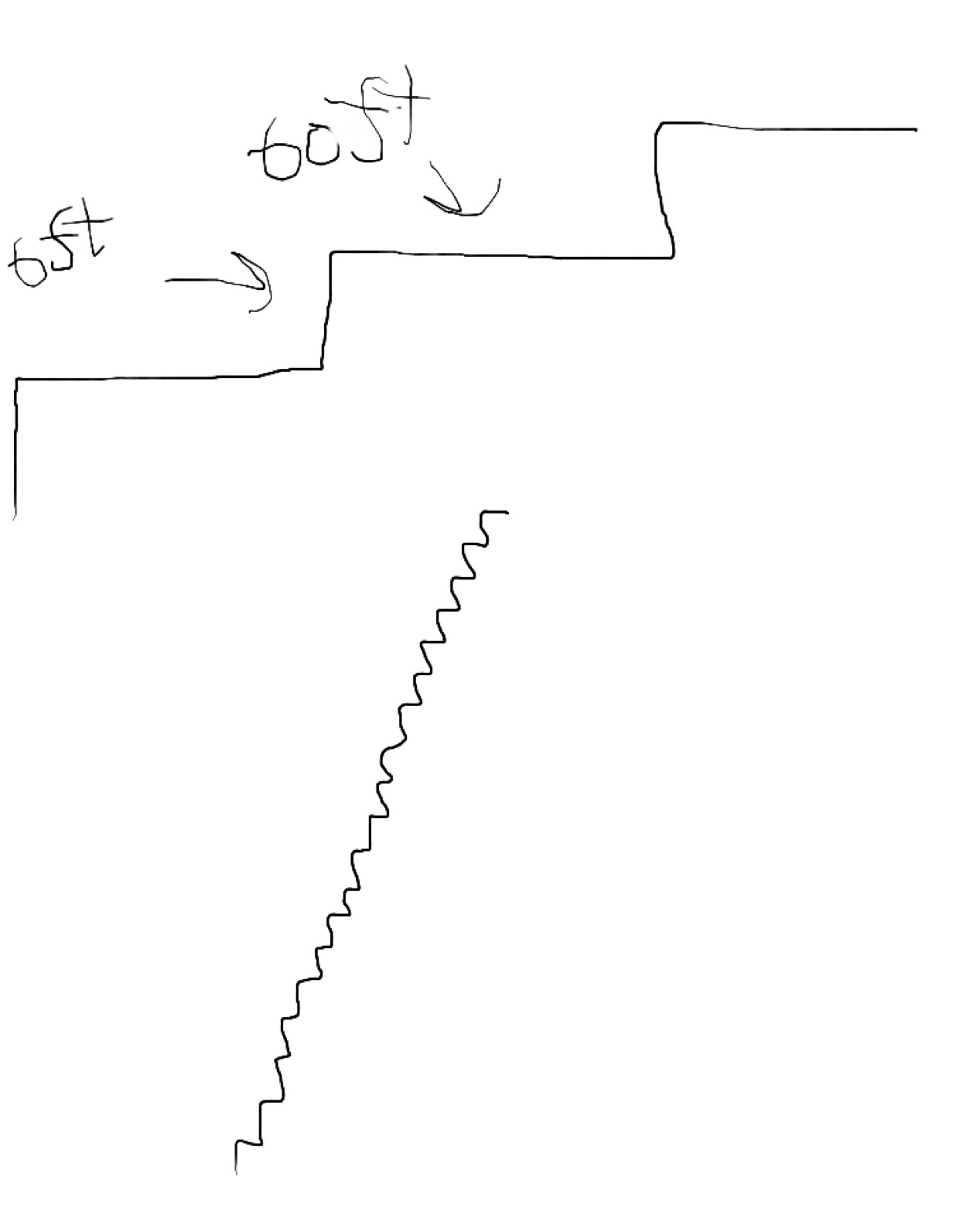
I really like this new improved one because I took a picture of the toy staircase from the board game 13 Dead End Drive (middle left). Last time, there were overall agreement on the shallowest (the Holiday Market) while there was disagreement on steepest. This time, because the toy was tiny (if not shallow), we had some disagreement there, which really let us tease out some definitions of “steeper” and “shallower.”

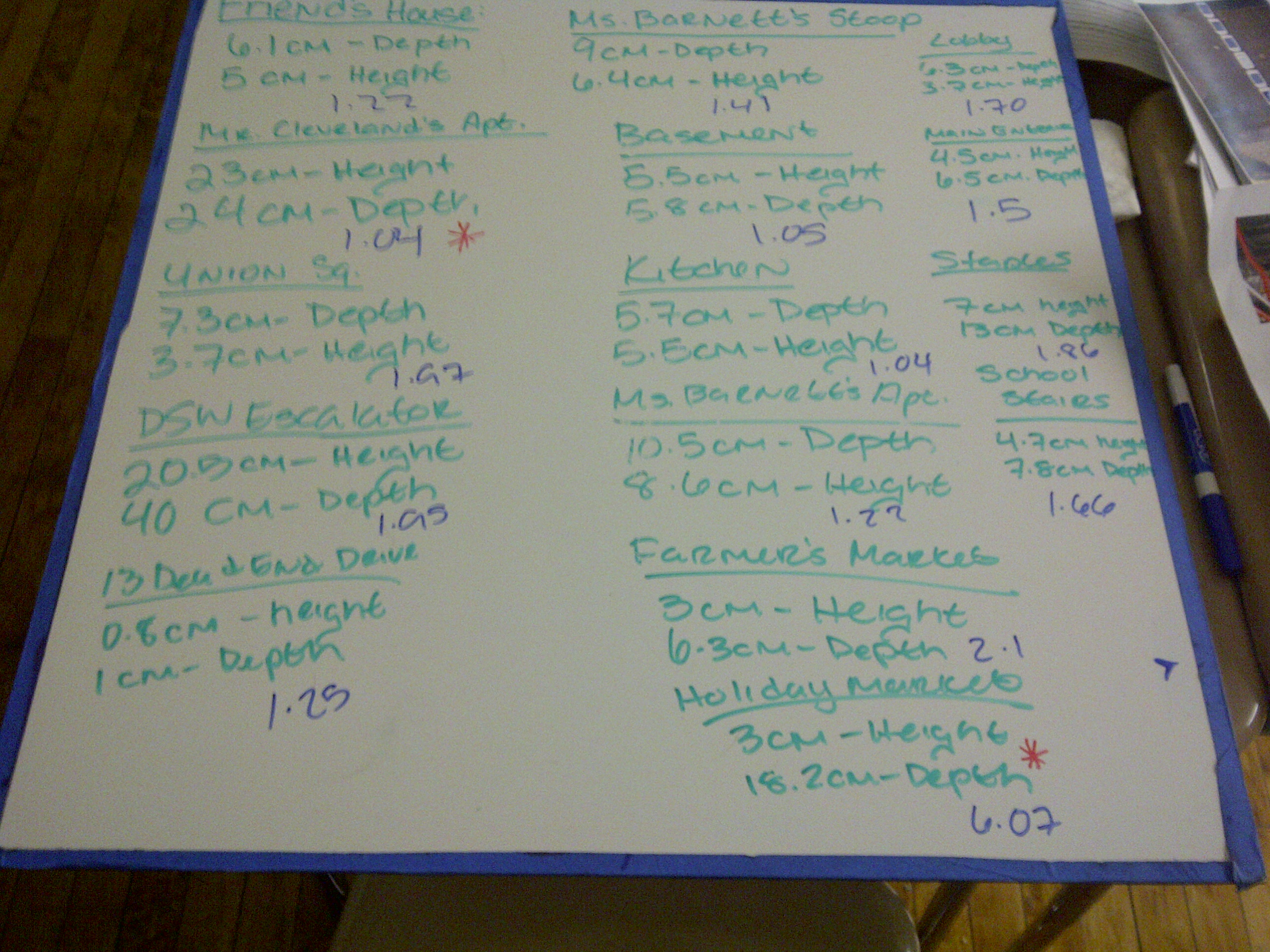
Once we had definitions of steeper (which usually came out to something like “closer to vertical” or “at a bigger angle”), I handed out the pictures on a sheet of paper and asked them to develop a method for determine which was steeper, or the steepest. I mentioned coming up with some sort of “steepness grade” (because I thought it would be amusing to throw the word “grade” in there).

So I let them struggle, and come up with what information they had to ask me for, which I would then provide. If I had to do it again, I would also have pictures of the width of each stair, as a distracter, because some kids asked for it. Interestingly, some also asked for the angle, because of our prior experience in the year with the clinometers. I told them I didn’t have the clinometer with me at the time. One kid called me on it, because she knew I had a clinometer app on my iPad. So I told her (truthfully) some of the pictures were taken last year, before I had it.

So I had them come up with their own measures. If they tried to base it off of only height or only depth, I deflected with examples of really tall, really shallow stairs, or really short, really steep stairs. TallShallow

By the end of the classes, students usually came up with one of three different measures: slope, the inverse of slope (depth over height), and grade (that is, slope as a percentage).

IMG-20121127-00127IMG-20121127-00125

So they had to then reason as to why they might prefer height/depth to depth/over. (Their logic: it seems more natural to have bigger numbers be steeper stairs, rather than the other way around.) And so it was that point that I told them this “steepness” grade that they developed was often called “slope” by mathematicians.

At which point, I got a big “Ohhhhhhhhhhh.” Which always makes it worthwhile.

The Materials

Stairs – Portrait

Stairs – Landscape

Steepest Stairs Lab

Fish Populations and Proportions

One of the labs I did back at Banana Kelly was a fish population estimation lab. You may have seen something like it before elsewhere. The idea is to explore proportions and the mark and recapture technique of population estimation.

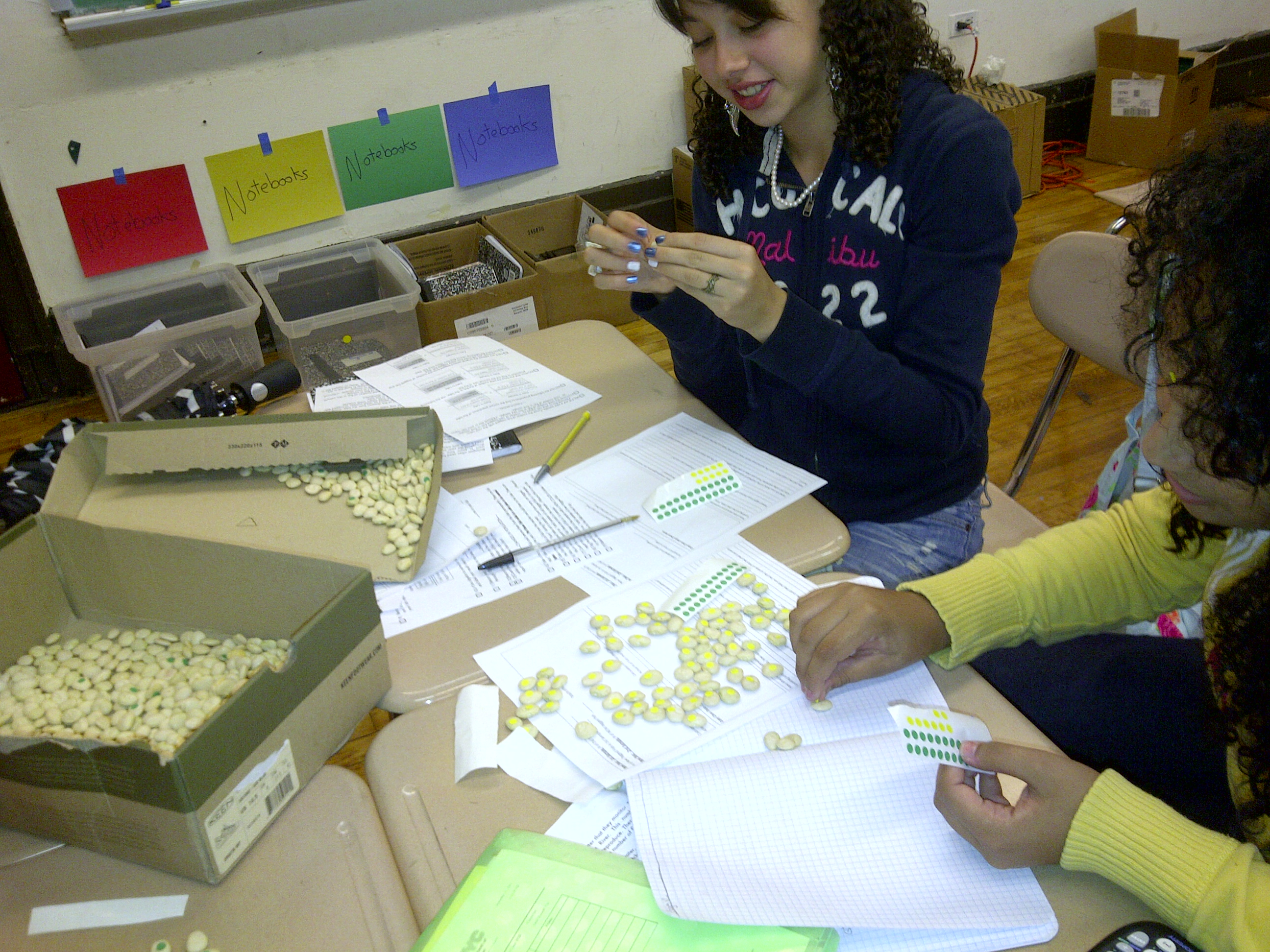
The gist is this: students have “lakes” filled with “fish” (boxes filled with lima beans). They use a sampling tool to collect a sample of fish and tag them all with stickers. Then they release the fish, mix them up, re-sample, and use proportions to determine the population of the lake. They do it a few times and average, then they count the actual population to see how close they were.

But I was at a BBQ the week before I did this lesson, and I was talking to my friend Rachel, who is a marine biologist. I mentioned the lab, and we talked about what they use tags for. One thing is to track populations over time, so they can determine the changes in populations since each different year has a different tag. I wondered if I could change the lab to include that.

(Rachel also dug up the video that I had students watch the night before. I’ve decide to have a little “flip” in my classroom by having students watch a video before we do a lab and start asking questions, which I can then address in the next class.)
So I thought about how I could change it. It actually took a lot of thinking, jotting things down on the white board, consulting with the living environment teacher to make sure I was on the right track. But I extended it, so now they would do at least 5 different calculations in the process, instead of spending all that time on just one proportion.

Now, students do the first part the same as before. Then, a random sample of fish “die” and are removed from the lake and put side, and a bunch of new fish are “born” by taking them from the bag of beans I had. Then when they took a sample of the new lake, they tagged the new fish (not already tagged) with a different color sticker. Now they had data from both years and could figure out the new population, and the difference from the old population.

Not every group got to the extension, but I think it improved the task overall.

The Materials

Fish Lab Instructions (formatted to fit in an INB)

The Lab Report

The Monty Hall Problem

(Step one in going through a bunch of posts I’ve wanted to make.)

After reading this post on the Monty Hall problem last year, I decided to do a lesson on it. And it worked out okay. But, as Riley Lark did in that post, I did it at the end of the probability unit. So this year, I decided to go for it and do it first. And I must say it worked out quite well, because from the get-go it shows them that what they think about probability isn’t quite right.

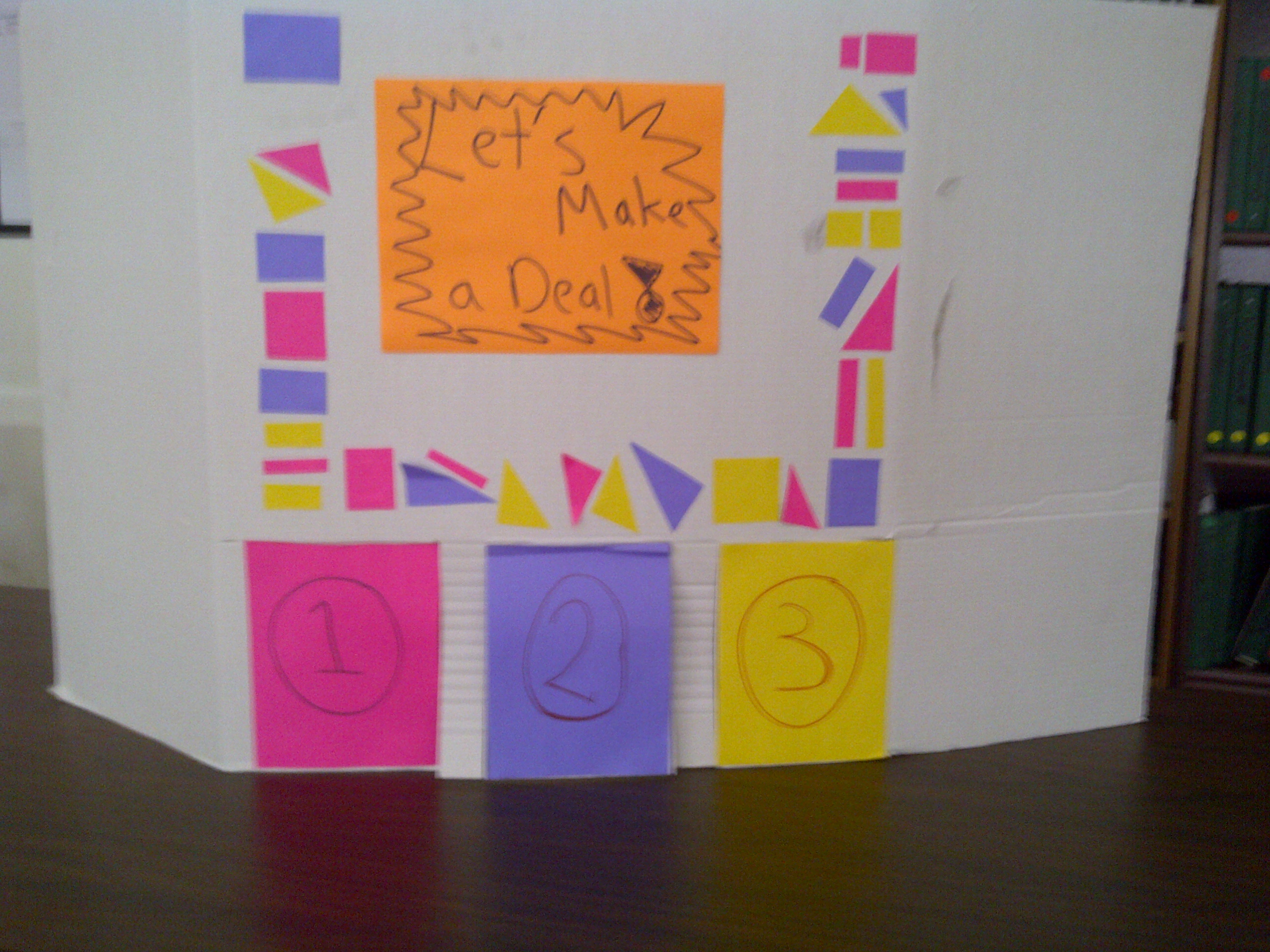
First, to play the game itself, it’s good to have a little showboat, plus something that is easy to reset. So I built this:

Image

(It’s a display board and I cut the doors open.) So it was much easier to play the game from the stay, and to keep my hands hidden as I do things behind the doors.

The other thing I did was, before we discussed the theoretical solution, I had them experiment. I gave each pair of students 3 playing cards, 1 red (for the car) and 2 black (for the goats), so one player played host while the other switched or stayed.

The main thing to learn is you really need to MAKE them switch, because teenagers are stubborn and are sure they were right the first time. But only staying won’t show all the necessary results.

Algebra Taboo

I remember reading about the idea of Math Taboo on Sam Shah’s blog, this post by Bowman Dickson. I feel like I had the idea independently, but it seems like many people have, by doing a cursory Google search of the phrase.

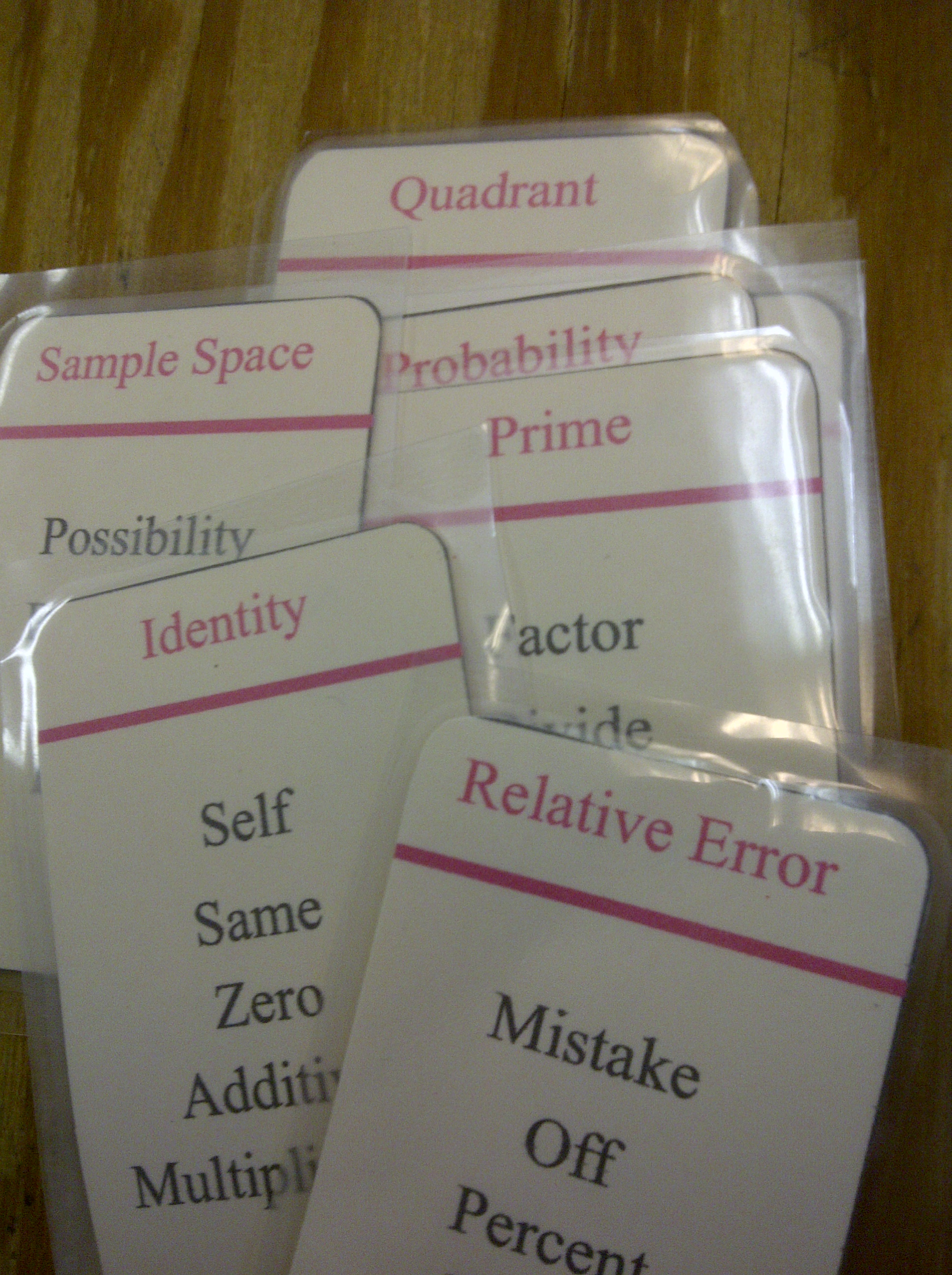
Unfortunately, there are lots of posts ABOUT math taboo, but no real materials provided. If I have seen anything, it’s a lesson plan on having the students make their own. Or I saw one for sale, but it was for the elementary level. So I made one myself.

My co-teacher and I went through all the Integrated Algebra regents given since 2008 and pulled out any words that it’s possible a student might not know. I also went through my own lessons and pulled out any vocabulary I had given them. Below is the .pdf for printing your own (I used card stock and laminated), and two .doc templates if you’d like to make more, or alter the ones I have. I made a total of 126 cards (63 double sides – maybe slightly overboard).

Since I found no others, it makes sense to share.

Downloads

Math Taboo (full pdf)

Math Taboo Pink  Math Taboo Blue (doc template)