Trying to find math inside everything else

Archive for the ‘lessons’ Category

3 Acts – Potatoes

I tried this out today in class (and will repeat tomorrow), and it worked out quite well. So now I want to share, my first 3 Acts problem.

Act 1

Potatoes – Act 1 from James Cleveland on Vimeo.

The question I intended to be asked was “How many of each potato do I need for the recipe?” or variants such as “What does he do now that the scale is broken?” or “Did he buy enough potatoes?” Those were all asked, along with some others.

Act 2

The video shows some things (how many potatoes I bought the first time, and the cashier says the totals), but it’s easier to lay that out when the students ask.

After that, they also wanted to know how much the potatoes cost, so I provided that.

But that’s all the information I can give: my scale is broken and I didn’t take the receipts from the cashier. Luckily, this is enough.

Act 3

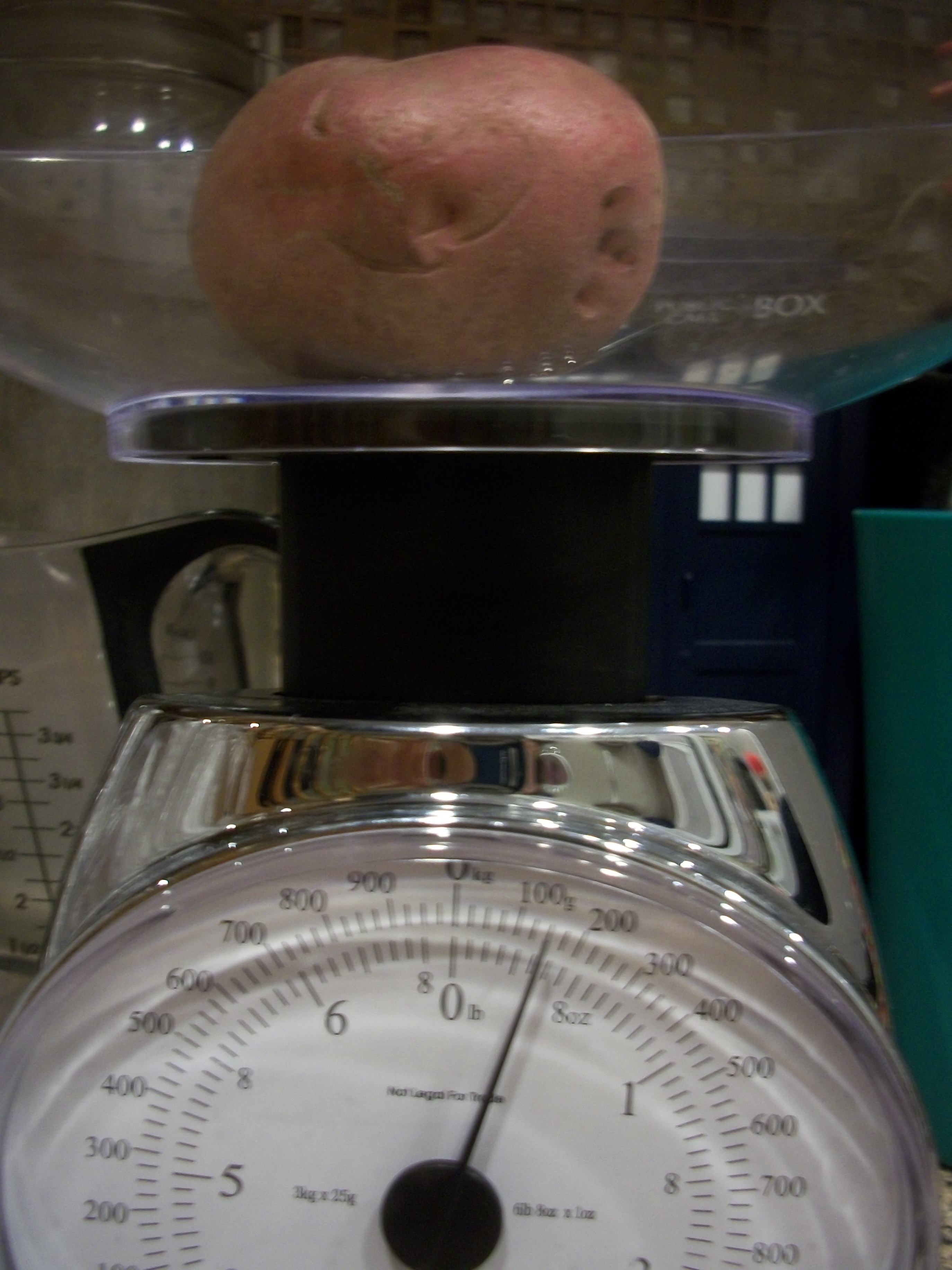
After we calculated the weight, we compared when I weighed them in my “new” scale.
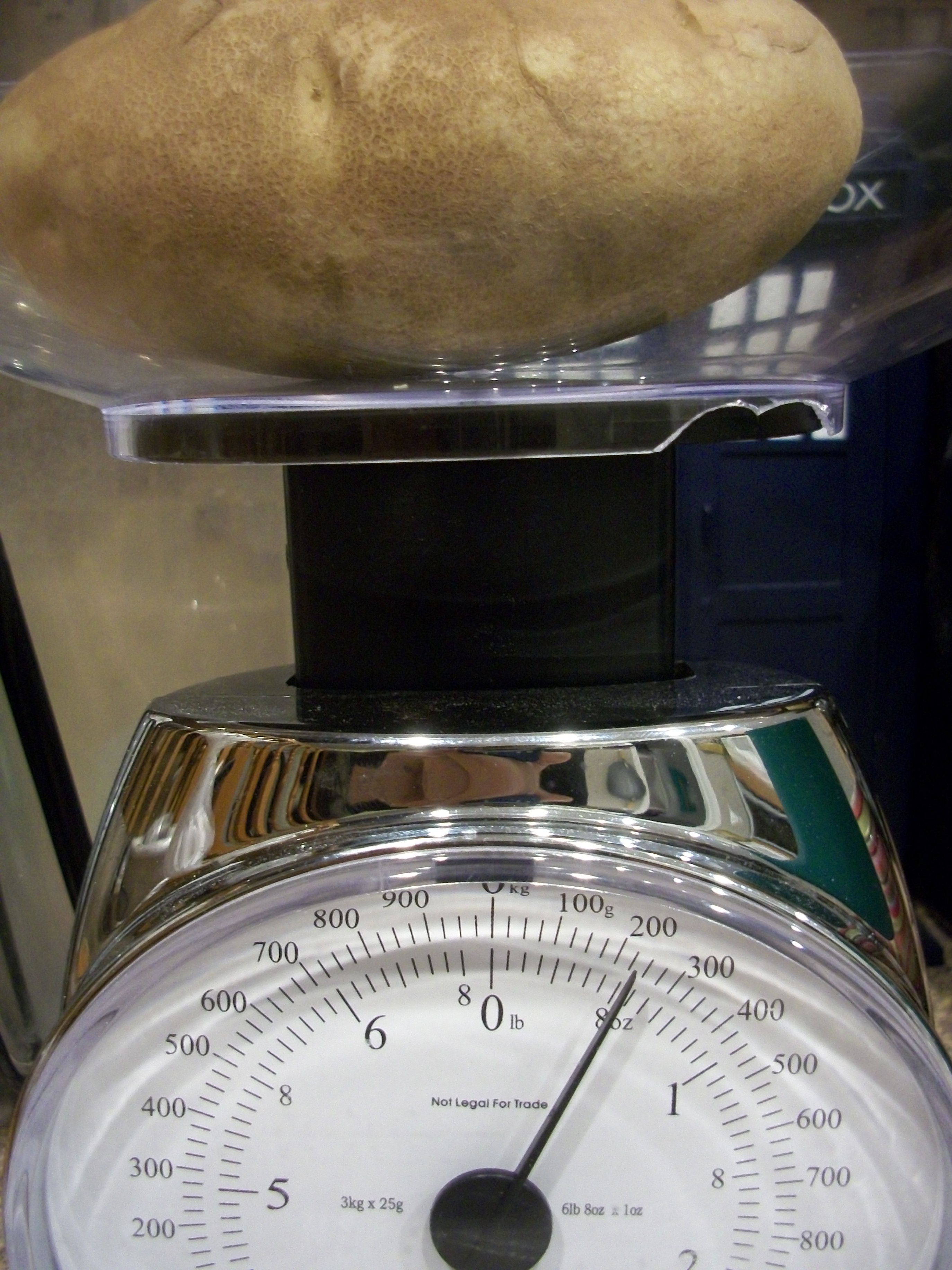
I wish I had my digital scale for a better Act 3, but it’s actually broken (and the calculations I had to do when it was inspired this problem) and the analog was cheaper. The solutions you calculate (.36 lb and .43 lb) are pretty close to the values on the scale (which I peg at .37 lb and .5 lb).

The problem itself, in terms of the system of equations involved, is not that complicated (because I am using it to introduce the concept of elimination), but for the students who solved it quickly, I had a trickier problem up my sleeve:

Extension
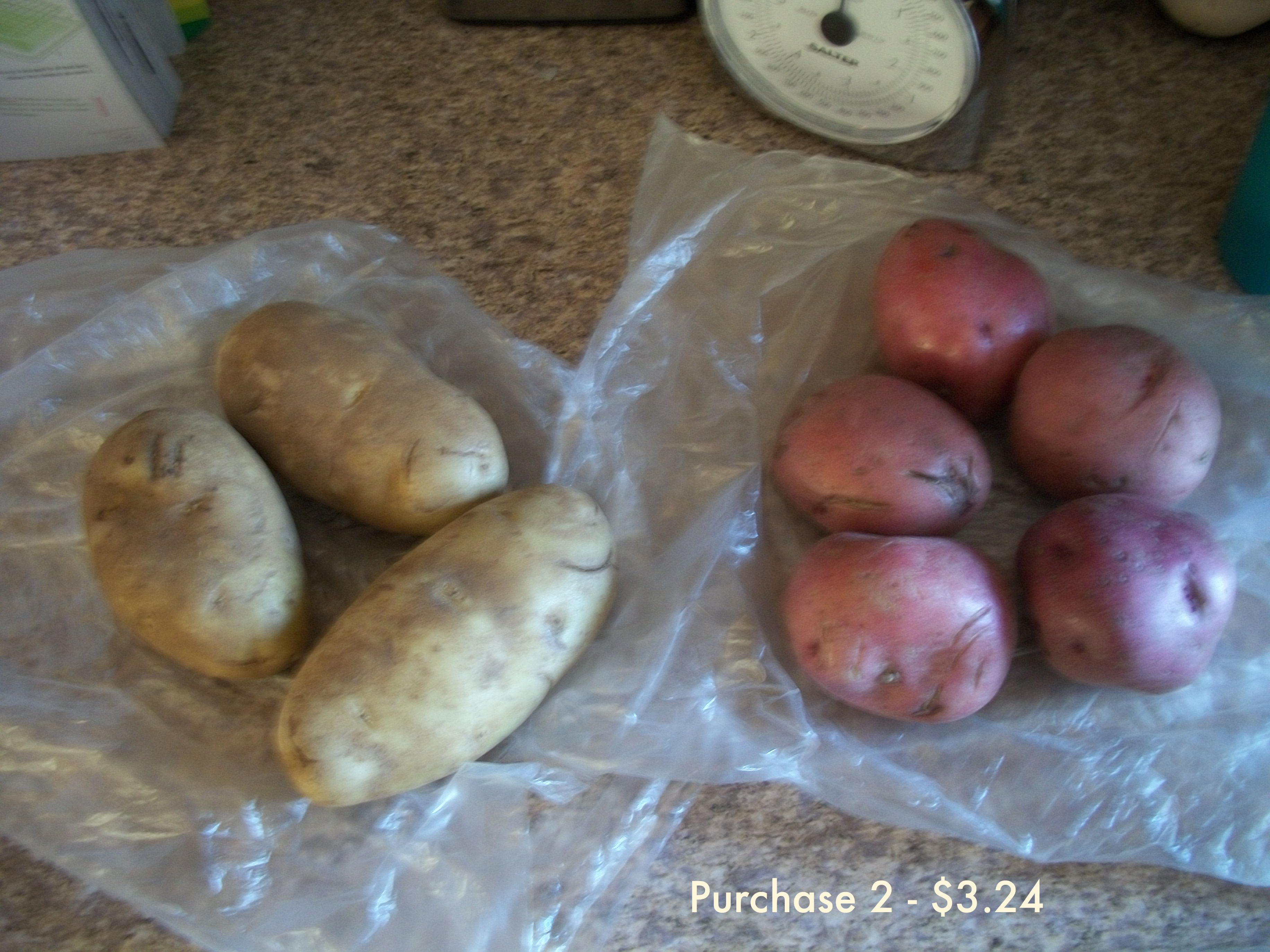
What if I had bought 3 Idaho potatoes on the second trip? How can I figure out how much each one weighs now?

The Complete Problem

Potatoes.zip

Steepest Stairs and Wacky Measurements

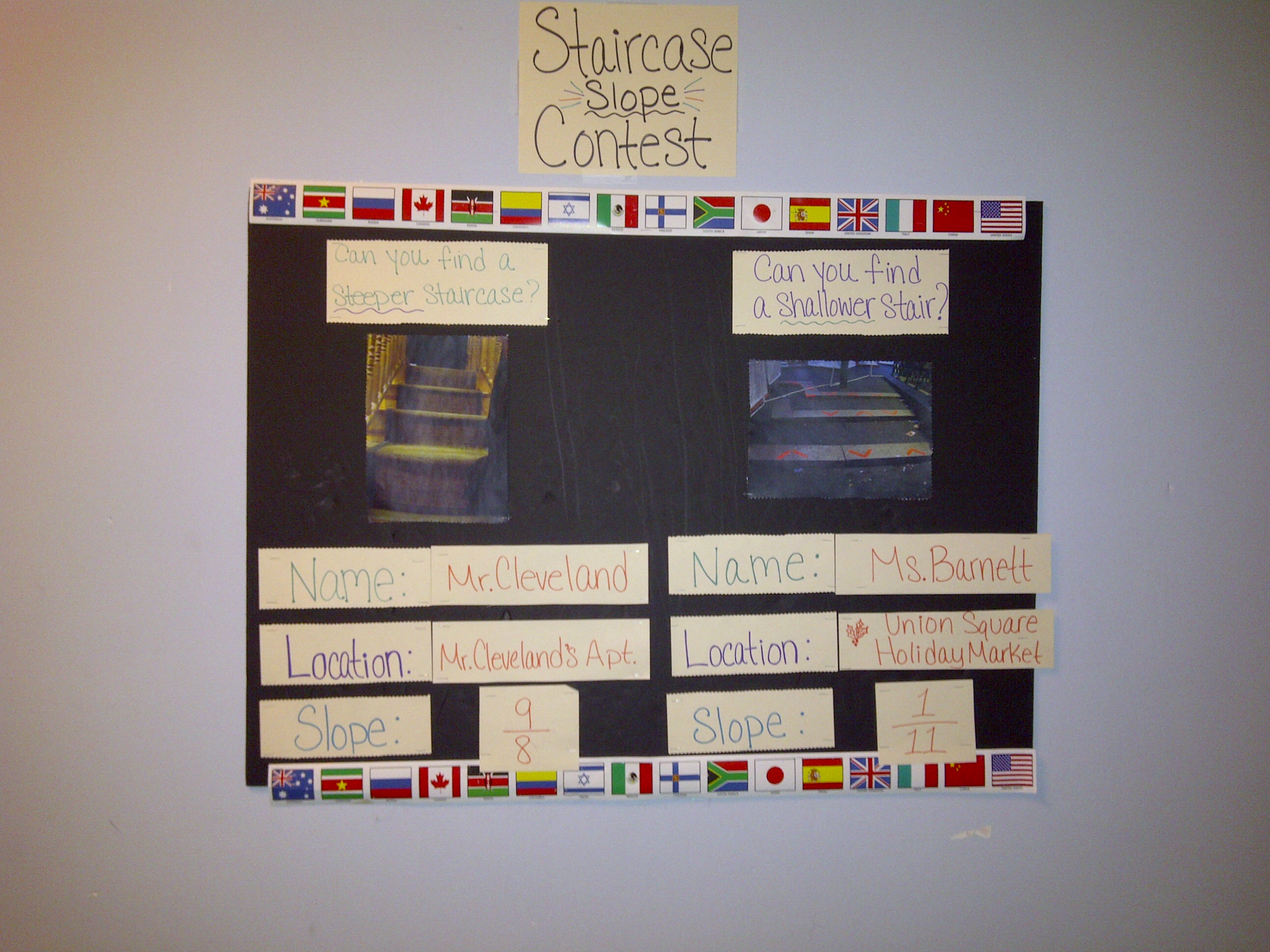
After reading Dan Meyer’s post mentioning a Steepest/Shallowest stairs contest, I decided to go for it. But Dan had them do it for homework after they knew what slope was. I decided that I thought steepness of stairs would be a great way to introduce the concept, and then we can have the contest after. So Ms. Barnett (my co-teacher) and I went around the area and took lots of pictures of stairs we can find. Then I put them up as a warm-up and asked them which were steepest and which were shallowest.

In every class, there was near-universal agreement on which stairs were the shallowest (the top-right), but lots of different votes for the steepest. So then I asked them, “How can you know? What does it mean to be steep?” I got a lot of good, intuitive answers from that (My favorite was that something is steeper when it is closer to being vertical). I asked them what they needed to know to find out which was steeper, and they said we should measure it.

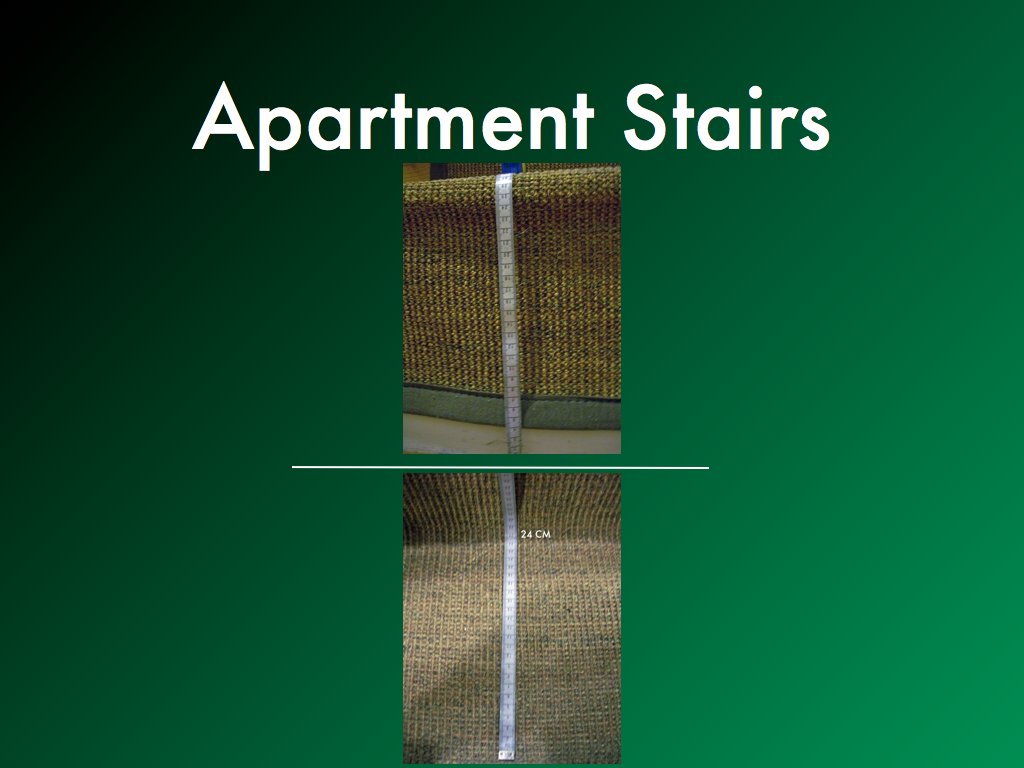
But what exactly should we measure? That took a little cajoling and probing, until we eventually decided on the height of the step and how deep it was. So I gave it to them:

Alright, now we have these measurements, what can we do with them? I lead them on a discussion on how best to use these numbers (a ratio), and we looked at another example. This is a pretty clear example (1/2), but not all of them are. So we used our estimating skills.


And my personal favorite…

(They really asked if I had 11 cell phones. I guess my Photoshop skills are better than I thought.)

The best part of these pictures is that they so naturally prompted them to question the units of measurement. “That one is cell phones, but the other one is hands. How can we compare them?” And so it’s natural to talk about slope as a ratio with no units. I didn’t have to artificially insert it. I even had a picture of a curved slide at the end, so we could theorize about the steepness of that.

Finally at the end I mentioned the contest. Unfortunately, I’m afraid Ms. Barnett and I did too well finding stairs. I’ve had students say they’ve been looking, and some say they found some (but don’t have pictures yet, though they have one more week). I hope someone can knock us off our thrones:

SLIDES:

Steep Stairs (PDF)

Steep Stairs (PPT)

How to Lie with Statistics – Stations

Cover of "How to Lie with Statistics"

I base my statistics unit on the book How to Lie with Statistics, by Darrell Huff, because I think it contains a lot of really important information that everyone should know to live their lives and to stop themselves being taken advantage of. (Which is one of the majors benefits of learning math, as it’s so easy for people who know math to swindle people who don’t.)

The problem is, though, all that important information that I think is so critical is not that important in the minds of the NY Board of Regents. Last year I went ahead and taught the whole unit around it anyway, but I’ve learned the errors of my ways when I found that my students were lacking in, say, the ability to make a box-and-whisker plot.

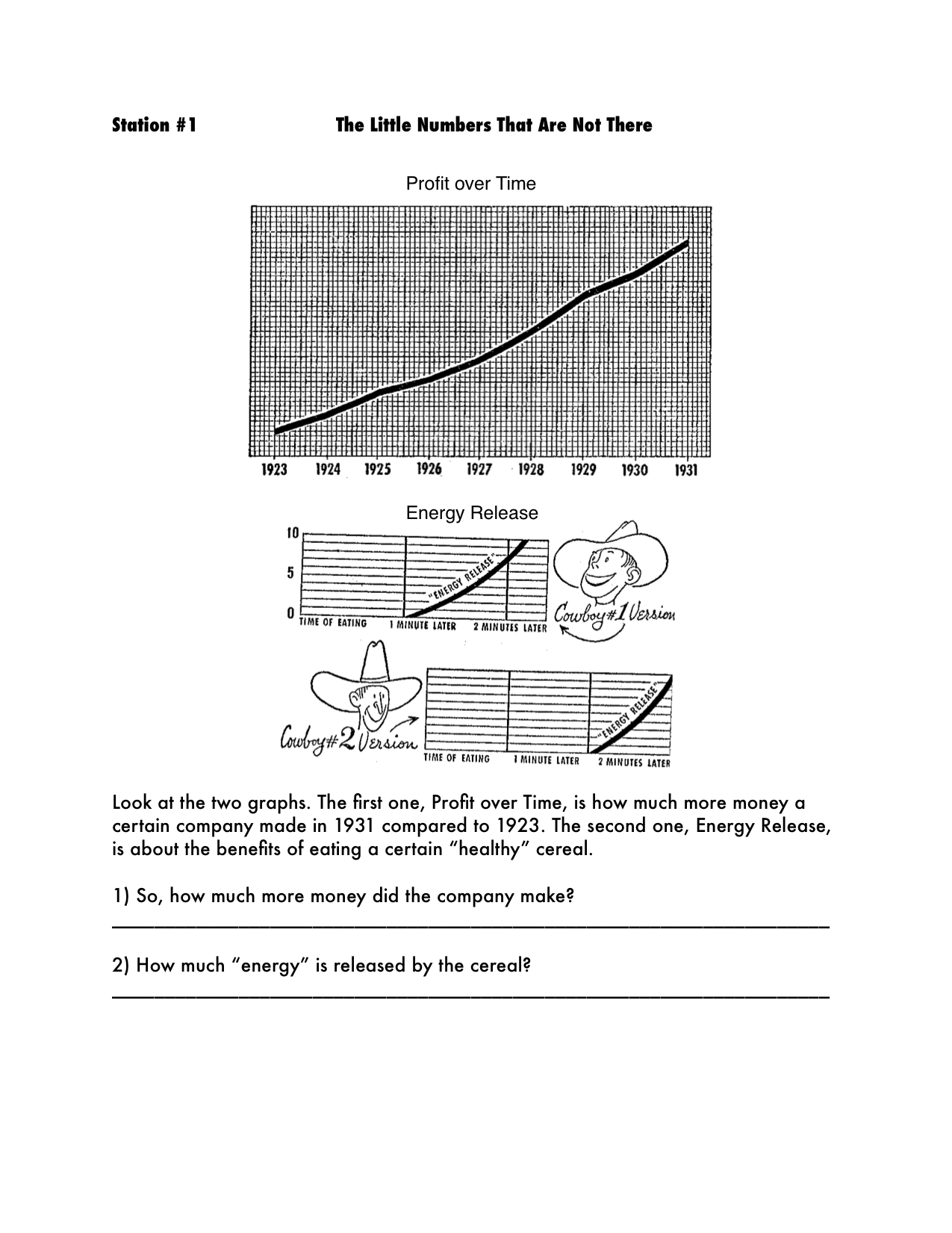
To compensate, I (along with my fabulous co-teacher) did a one-hour lesson that I broke up into stations, with each station representing a different “Lying Technique” that I wanted the students to learn about. (I had already covered The Sample with the Built-in Bias and The Well-Chosen Average as a normal lesson prior, because those are still relevant topics.) Each station lasted about 10 minutes, with some time for wrap-up and transit.

First page of Station 1

I also did this to support the project I had them working on, which is the topic of another post.

Stations in pdf form.

Egyptian Fractions

As I stated earlier, I’ve been trying hard this to integrate the other subjects more into my math lessons (and the other teachers are happy to work vice versa, because I’m on a great grade team). This process is made easier by actually having a Special Ed co-teacher for one section, and she specializes in math (and sees every subject, so can comment on all of them). So my first lesson explicitly tying history to math just went off, a lesson on Egyptian Fractions.

My goal for this lesson was really to get some fraction practice in while still learning something new, while also highlighting the “symbol that represents the multiplicative inverse,” , which I’d tie in on the next lesson about exponents (aka an exponent of -1). We worried, though, that the translation process would be too tough while dealing with fractions. That’s when we came up with this:

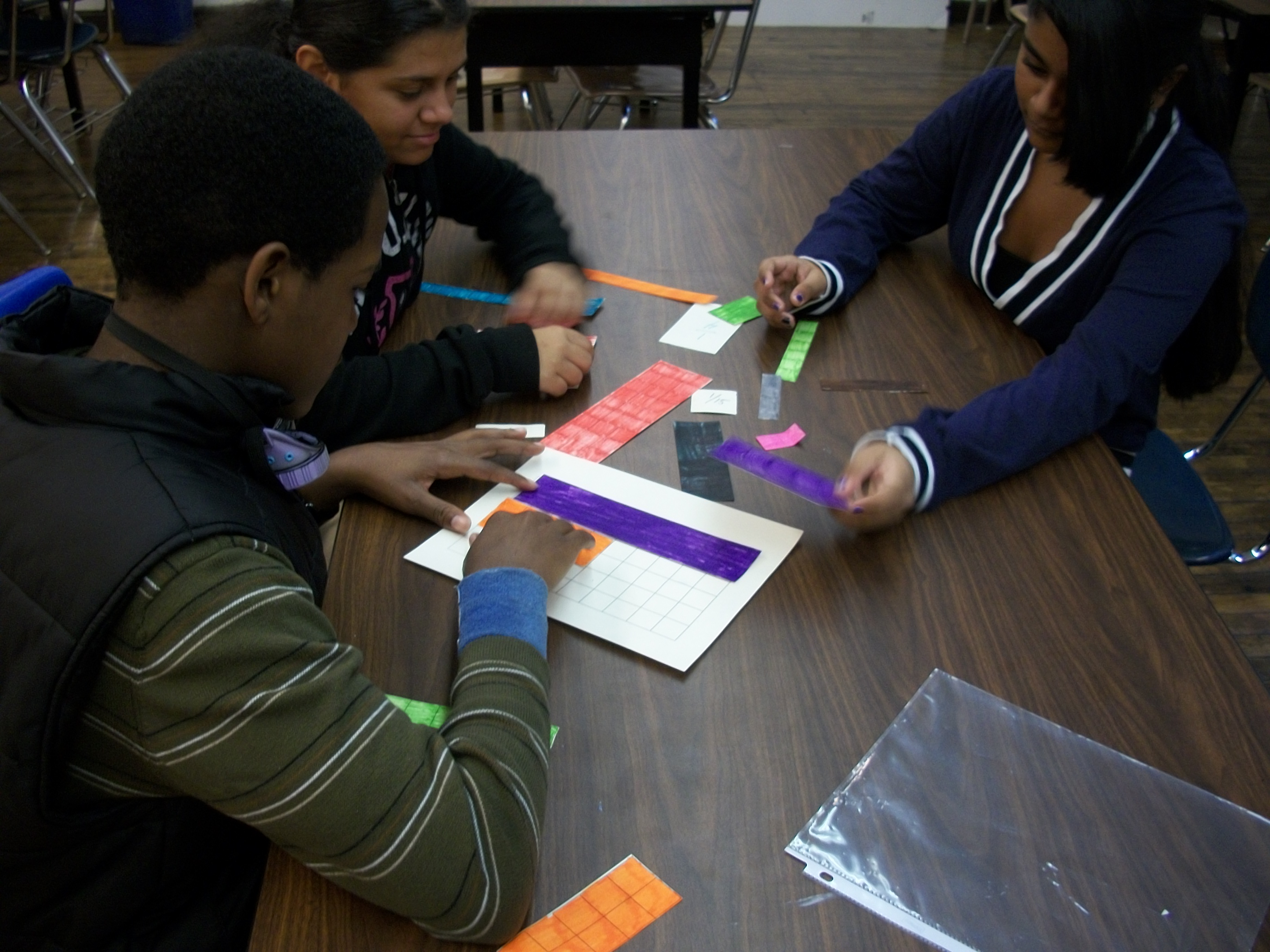
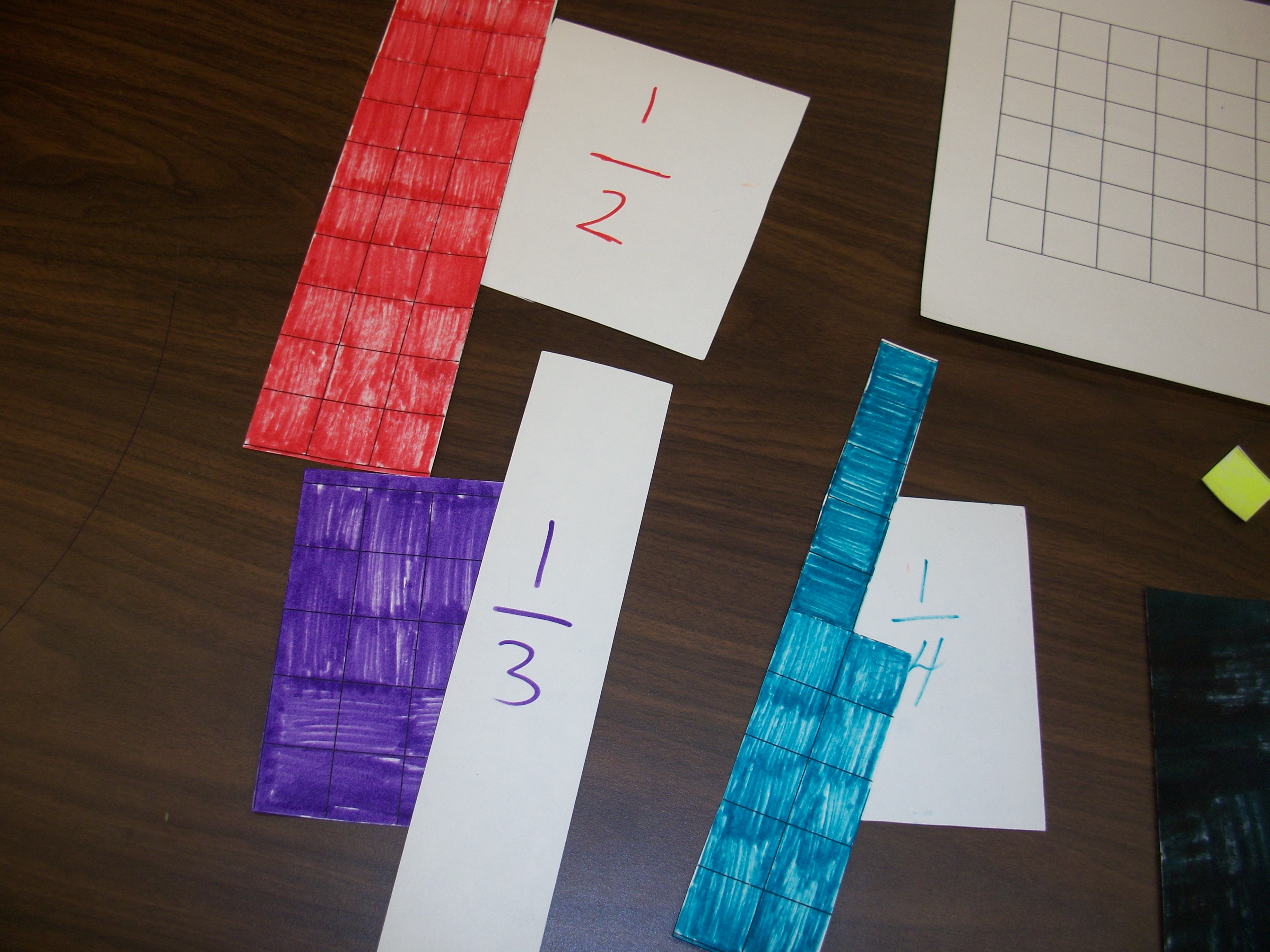
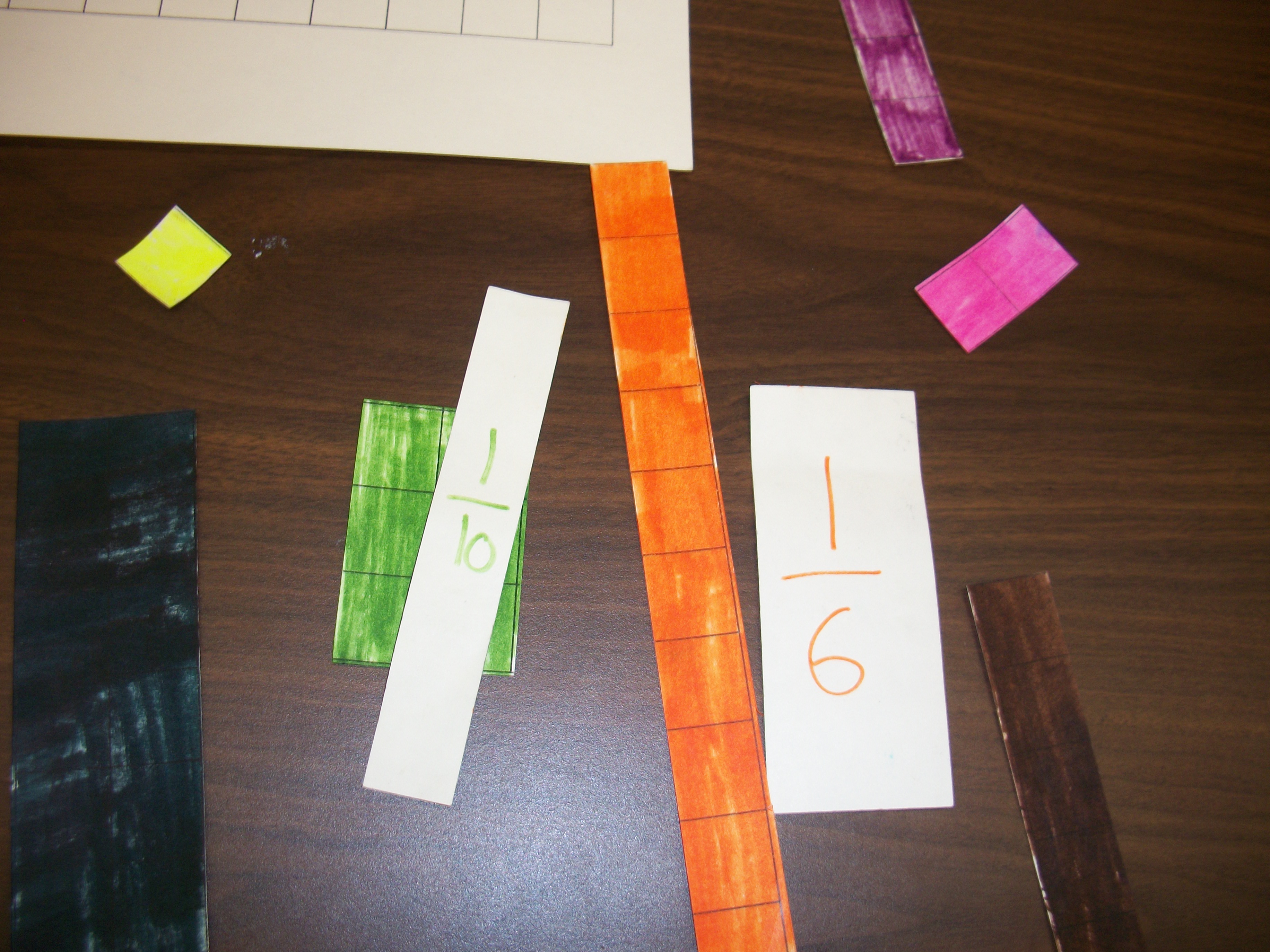
The Fraction Board has 60 square on it (which will be good reference for when I deal with sexagesimal Mesopotamian numbers soon), so each piece is cut to fit the amount of square that will cover that fraction of the board. To make the boards, I just made a 6×10 table in word as square-like as I could, printed on card stock. Then I cut the pieces out of the extra boards and had slave labor student volunteers color them in for me.

Each fraction have multiple pieces to represent the different ways you can fit them. (For example, 1/2 is 30 square, so I have a 3 x 10 piece and a 5 x 6 piece). But each fraction is also colored the same, because in Egyptian Fractions you can only use one of each unit fraction.

Then I would put up a slide like this on the board:

And the students would have to make that shape on their boards, with no overlapping and only using each color once. For the first one I shared a possible solution:

But I got really excited when the students could come up with multiple different solutions for each problem. And I would increase the difficulty of each one, until I would just get to a fraction with no picture:

And they still nailed it. Eventually I would move away from the boards and show the process of how to do it without the boards. We’d do some simultaneous calculation (using the greedy algorithm or more natural intuition) and checking on the board. Then we’d try with non-sexagesimal fractions. And every time we would translate our answers into hieroglyphics as well. So by the end of the lesson they could work on a worksheet where I just gave a fraction and they gave me hieroglyphics in return. (Not all of them could do this completely, but most could do some of the sheet). I think, overall, it went pretty well.

Egyptian Fraction Slides (Powerpoint)

Egyptian Fractions Slides (pdf)

(WordPress doesn’t seem like it’ll host my slides in their original Keynote form. That’s bothersome.)